The stylus is the only part of the entire system that actually touches the record. Whether the turntable's speed is stable, whether the tonearm's geometry is correct, and whether the phono stage's gain is sufficient are all just prerequisites for sending out a signal; the only thing actually making mechanical movement in the groove and reading vibrations as sound is the tip. It determines what you hear, and also determines how the record surface is treated.
The trouble is that stylus wear is gradual. It will not suddenly fail on a certain day, but over several months slowly make the highs darker and inner-groove distortion heavier. Most people first realize it is time to replace the stylus because even a record that was originally in good condition no longer plays well.
This guide gives an order of judgment: first rule out setup issues, then rule out cleaning issues, and only last determine lifespan. The order cannot be reversed, because distortion caused by misalignment and distortion caused by wear sound very similar, and replacing a stylus that was still fine will neither solve the alignment problem nor let you keep a usable reference.
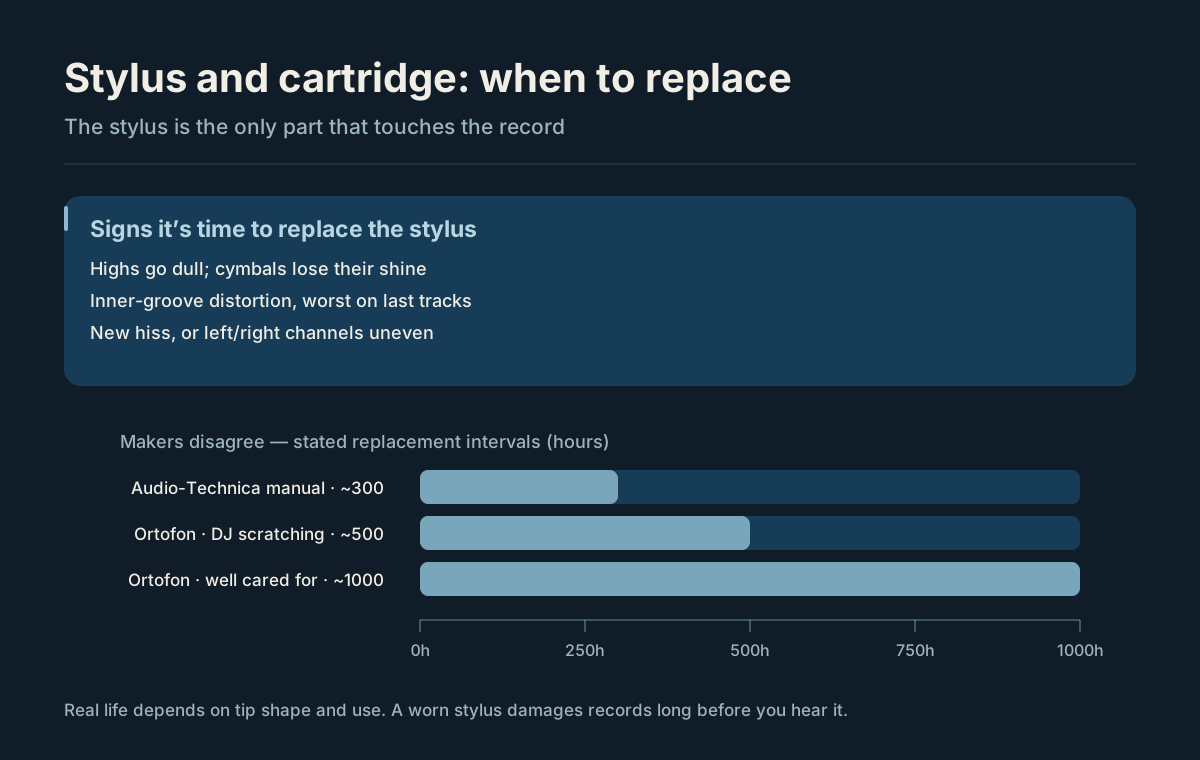
Schematic: Manufacturer recommendations vary widely, from about 300 hours to more than 1000 hours.
Key Points at a Glance
- The stylus is a consumable, but manufacturer-rated lifespans vary widely: Audio-Technica's manual recommends about 300 hours, while Ortofon says that with proper care it can reach 1000 hours (about 500 hours for DJ scratching use). Estimate according to the specific model's manufacturer instructions and actual playback conditions, not by the year of purchase.
- Darkening highs, inner-groove distortion, and left-right channel imbalance are typical signals, but they can equally come from tracking force, anti-skate, the phono stage, or the record itself, and each must be ruled out item by item.
- The cleaning order is first dry brushing, then wet cleaning if necessary; do not blow on it with your mouth, do not touch the tip with your fingers, and do not use solvents of unknown origin instead of dedicated cleaning fluid.
- Before deciding to replace, do two things first: recalibrate tracking force and anti-skate within the manufacturer's recommended range, and replay the inner grooves with a record you are confident is in good condition.
- If the cartridge itself is not broken, replace the stylus first; when the cartridge is discontinued, compatible styli are hard to find, or it was an entry-level model to begin with, replacing the whole cartridge is often more practical.
Why the Stylus Wears
The contact area between the tip and the groove is extremely small, and tracking force concentrates the weight of the tonearm and cartridge onto such a point. The groove walls therefore bear very high pressure over the long term, and every playback leaves some irreversible change on the tip and the vinyl surface. This is the essence of wear: it is not that some part suddenly breaks, but that both surfaces change a little after countless frictions.
It is easier to understand this when magnified: the tip advances along a spiral, the left and right walls of the groove each carry the modulation of one channel, and the tip must simultaneously stay in contact with both wall surfaces and keep up with the fastest transients. Any factor that prevents the tip from staying stably in contact concentrates pressure onto a smaller area, and wear accelerates accordingly.
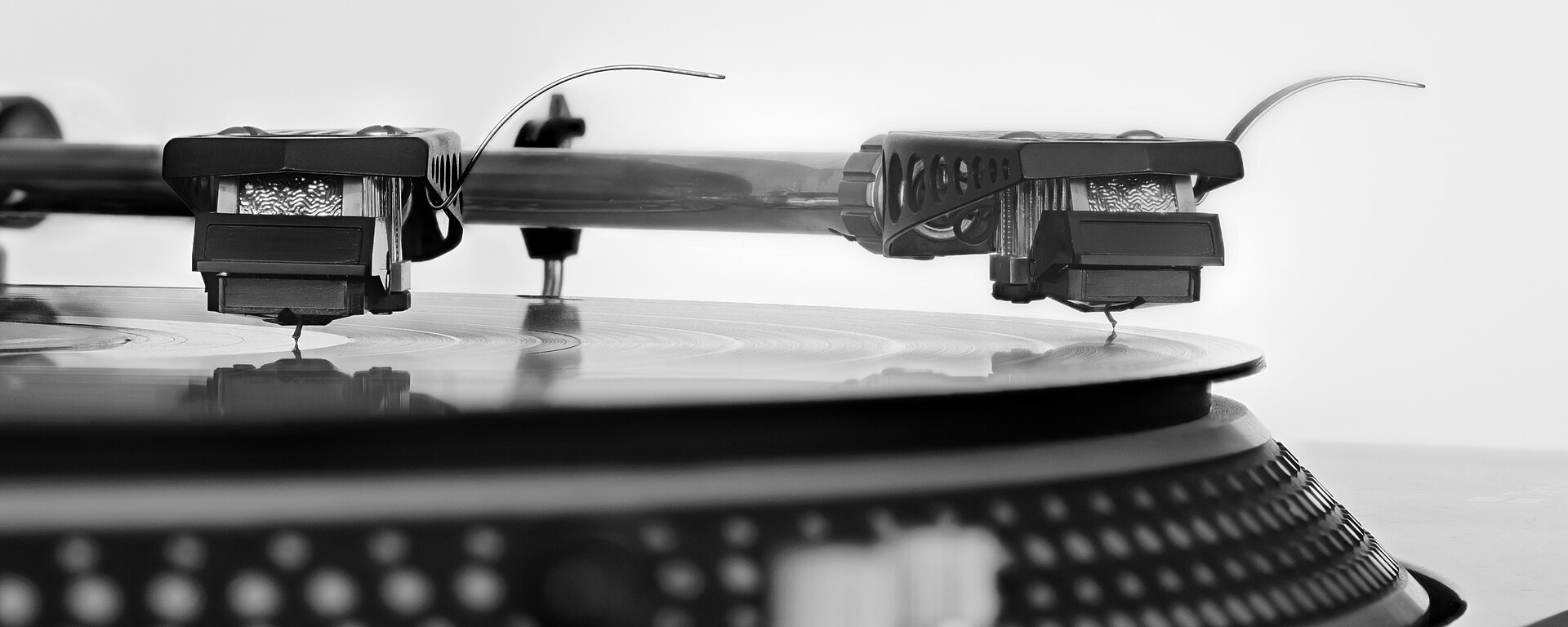
The stylus bears great pressure over an extremely small contact area, and every playback is one episode of wear.
The main factors that actually accelerate wear are these:
- Dust and debris on the record. They get caught between the tip and the groove and act as an abrasive. This is also why cleaning records and maintaining the stylus are really two sides of the same thing.
- Tracking force outside the manufacturer's recommended range. Too low lets the tip briefly leave the wall at transients, producing impact; too high presses more pressure directly onto the groove. Both directions speed up wear, and they do not cancel each other out.
- Improper anti-skate setting. Anti-skate counteracts the tonearm's tendency to slide inward. If it is set incorrectly, the tip will press against one side of the groove over the long term, causing uneven wear between the left and right channels.
- Deviation in tracking angle and azimuth. These make the tip's contact surface no longer parallel to the groove walls, which amounts to scraping with one edge.
- Differences in tip shape. Conical tips have a larger contact area and are usually more durable; elliptical, line contact, and Shibata shapes fit the groove more closely, extract more detail, and are also more sensitive to angle. Lifespan cannot be judged by shape alone; manufacturing precision and polishing quality also matter.
- The condition of the record itself. Records that are already worn or heavily scratched consume the stylus faster; this is a mutually damaging relationship.
How to Estimate How Much Life You Have Left
The numbers given by manufacturers vary widely, and they are not a precise countdown. To turn them into a judgment useful to you, you need two things: the playback duration of one record, and the number of times you actually play records.
One side of a 12-inch LP is usually around twenty minutes, and listening to both sides takes about forty minutes; people who habitually listen to both sides accumulate more than ten hours after every twenty-some records. Multiply this number by your listening frequency to get a rough cumulative amount, then plan according to the lower end of the range, which is more conservative and also safer.
- Treat the lower end of the range as a reference line, not the upper limit. Once you reach seven or eight hundred hours, start paying attention to changes in sound.
- Treat styli of unknown origin as near the end of their life. If a cartridge comes with a used turntable, the stylus tip's origin is unknown, or the previous owner's habits are unknown, treat it as needing replacement first.
- Start counting again after replacement. Stylus life is not inherited; a new stylus is a new starting point.
- Record the cartridge model, replacement date, and cumulative hours. Pen and paper or a tracking tool both work; if you already use GROVV to manage your collection, keeping equipment and maintenance records in the same system will be easier, see the approach in Managing a Vinyl Collection with GROVV.
Hours are only one dimension of wear. Record cleanliness and alignment precision both change the actual rate: a stylus that has run eight hundred hours on clean records in a well-aligned system is likely in better condition than one that has run four hundred hours on dirty records with high tracking force.
Audible and Visual Signals of Wear
Changes in sound usually appear in the following order, though different systems do not follow it exactly:
- High frequencies become dull. Cymbals lose their sheen, string harmonics diminish, and the whole presentation sounds like a thin veil has been draped over it.
- Sibilance and inner-groove distortion worsen. Vocal sibilance starts to sound harsh, becoming more obvious in the last two or three tracks closest to the label. The inner groove is the hardest place to track because in the same revolution the stylus must read a shorter length of groove with denser modulation.
- Left-right channel imbalance or narrowed imaging. This usually points to anti-skate or azimuth, and may also come from uneven stylus tip wear.
- Hissing or pops that were not there before. This needs to be distinguished from damage on the record itself.
- Dynamics become compressed. You need to turn the volume higher to hear details, yet loud passages no longer sound effortless.
Visual inspection is also useful, but it requires tools and a bit of patience:
- Use a jeweler's loupe or small microscope with sufficient magnification to observe the stylus tip, focusing on whether there are obvious flat worn facets, clumps of debris, and whether the cantilever is skewed.
- Let the stylus move slowly under strong side lighting and observe the reflection pattern from the tip. A flattened tip reflects light differently from a new one.
- Check the relative position of the cantilever and the cartridge body. A cantilever that has been pushed sideways may already be misaligned, and alignment alone cannot fix this.
- Observe the suspension damping inside the cartridge. Rubber parts age and harden over time; even with little playing time, the suspension may have lost its elasticity.
Whether by listening or by sight, do not skip the process of elimination: try a record known to be in good condition as a control, check the phono input and cables, and confirm the turntable is level. Only after ruling out these variables should you conclude that the stylus is the problem.
Cleaning the Stylus: Dry Brushing and Wet Cleaning
The goal of stylus cleaning is simple: remove dust and dirt attached to the tip while applying no lateral force to the cantilever.
Dry brushing is the daily method:
- Use a dedicated stylus brush, brushing gently from back to front along the direction of the cantilever so the bristles sweep across the tip rather than pulling sideways.
- Brushing once after each record is easiest. Once dirt hardens into a crust, it is much harder to deal with.
- The brush itself must be clean. If dust accumulates on the bristles, you are simply wiping dust back onto the tip.
Wet cleaning is for deposits that dry brushing cannot remove:
- Use a commercially available stylus cleaning fluid, or use a cleaning gel. To use cleaning gel, press it down and lift it up, relying on its tackiness to pull deposits off the tip.
- When using cleaning fluid, dip the brush bristles in a small amount and still sweep gently along the cantilever direction; do not coat the entire cartridge with liquid.
- After cleaning, let the tip dry naturally before playing a record again. A tip with liquid on it will attract new dust.
- Wet cleaning does not need to be frequent; daily dry brushing with occasional wet cleaning is more reliable.
A few clear don'ts:
- Do not blow on it with your mouth. Saliva and moisture introduce new dirt, and you cannot control the force.
- Do not touch the tip with your fingers or any hard object. Even a light touch may change the cantilever's position.
- Do not brush with lateral force. This is the action most likely to bend the cantilever.
- Do not use solvents of unknown origin instead of dedicated cleaning fluid. Some adhesives and damping materials are sensitive to solvents, and liquids with unknown formulations carry uncontrollable risk.
Do Not Ignore These Settings: Tracking Force, Anti-Skate, and Tracking Angle
Half of a stylus's performance depends on setup. Each of the following deserves rechecking after changing cartridges, changing tonearms, or even changing platter mats of different thicknesses:
- Tracking force: Exceeding the manufacturer's recommended range accelerates wear on both records and stylus. Too low is not safer than too high; it brings skipping and transient shocks. Measure with a separate tracking force gauge, not just the scale on the tonearm.
- Anti-skate: Generally matched to tracking force. Too much makes the tip pull to one side, causing one-sided wear; too little tends to produce distortion in the right channel.
- Tonearm height and tracking angle: This determines the attitude at which the tip enters the groove, affecting high-frequency performance and which part of the groove wears.
- Azimuth: Tilting the cartridge left or right causes asymmetric wear on the two groove walls and disrupts channel balance.
- Overhang and effective length: Installation position errors cause tracking error around the entire record, and this kind of distortion is often most obvious in the inner grooves.
- Mounting tightness: Screws that are too loose let the cartridge move with vibration, while screws that are too tight may deform the cartridge body under stress.
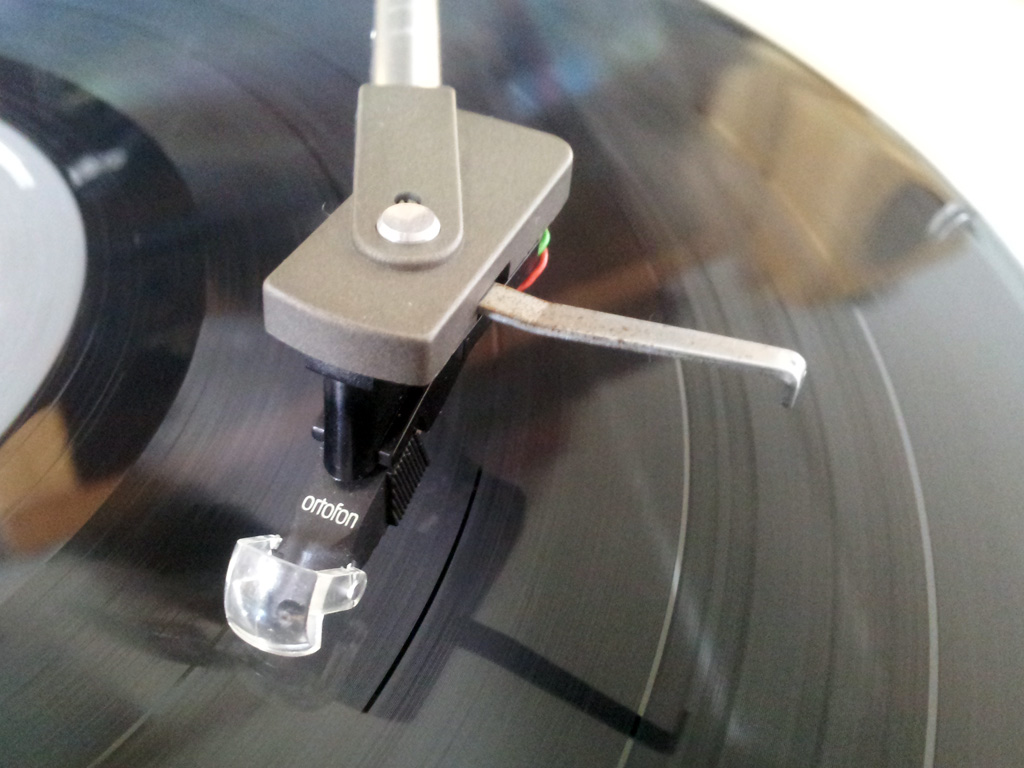
After changing the cartridge or tonearm, tracking force, anti-skate, and tracking angle must all be recalibrated.
These settings don't need frequent adjustment, but after every time you touch the cartridge, you must recalibrate them. The order is also worth fixing: first confirm the turntable is level and the speed is correct, then install the cartridge, adjust overhang and azimuth, then set the tracking force, and finally set anti-skate based on the tracking force. If the order is messed up, earlier adjustments will be undone by later actions.
The Lifespan of the Cartridge Itself and Upgrade Decisions
The stylus and the cartridge are not the same thing. The stylus is that component with the tip, and the cartridge is the transducer that converts mechanical vibration into an electrical signal. To decide what to replace, first distinguish which structure you're dealing with:
- Moving magnet (MM) and moving iron (MI) cartridges usually have replaceable stylus assemblies. When the cartridge body is not damaged, replacing the stylus is the most direct choice.
- Moving coil (MC) cartridges have lower output, and many models' styli cannot be replaced by the user, requiring professional retipping or replacing the entire unit.
- All-in-one designs in low-priced cartridges often make the stylus and body as one piece, in which case replacing the stylus and replacing the cartridge are the same thing.
Besides playing time, there are two easily overlooked dimensions:
- Aging of the damping rubber. The rubber part suspending the cantilever will harden over time, and even if the playing hours are not many, the sound may become taut and tracking ability may decrease.
- Physical damage to the stylus tip. An accidental collision can chip the tip or shift the cantilever, regardless of cumulative playing time.
Before upgrading, first confirm that other links in the chain will not become bottlenecks. Moving coil cartridges require a phono stage that supports MC or a step-up transformer, while moving magnet cartridges are more sensitive to capacitive loading. The signal output by the cartridge must undergo RIAA equalization when amplified, and the accuracy of equalization directly determines whether the frequency response is correct; for the ins and outs of this curve, you can refer to the introduction to RIAA equalization. If the input matching of the phono stage is already wrong, replacing with a more expensive cartridge will only magnify the problem.
A practical judgment is: if the replacement stylus you need is easy to buy and from a reliable source, replace the stylus first; if the cartridge is discontinued, the compatible stylus source is unclear, or you originally wanted to upgrade a level, then put the budget into a complete cartridge. Third-party replacement styli vary greatly in specifications, so when purchasing, confirm the cartridge model and stylus shape they correspond to.
Stylus Condition and Record Condition Are Two Different Things
In a system, there are two kinds of wear at the same time: that of the stylus, and that of the record. Their auditory symptoms often overlap and need to be evaluated separately.
An old record in average condition will naturally sound dull in the high frequencies, and the inner grooves may also have distortion due to the previous user's playback history. If you misjudge this distortion as stylus wear, you will keep replacing the stylus; conversely, if you misjudge record damage as a stylus problem, you may continue to play more records with an already worn stylus.
The method of judgment is straightforward: change to a record you know is in good condition, and listen only to two or three tracks on the inner grooves. If the distortion remains, the problem is in the stylus or setup; if only that old record has problems, then it's back to the record itself. For record condition grading methods, you can refer to the Vinyl Condition Grading Guide.
To understand the relationship between grooves, styli, and vibration, you can read How Vinyl Works and Four Types of Listeners. The condition of records in second-hand collections varies, which is why many people are willing to spend time selecting; for related mindset, see Why I Listen to Secondhand Vinyl.
Frequently Asked Questions
Does the stylus age even if not used often
Yes. Besides playback wear, the rubber damping part suspending the cantilever will harden over time. If a cartridge has been unused for a long time, when putting it back into use, it's best to first check the suspension state and sound performance.
Will using cleaning gel damage the stylus
No, if used as directed. Cleaning gel relies on stickiness to remove attachments, and the force is vertical; what's truly dangerous is pushing or pulling the cantilever laterally. When using, keep the cartridge stable on the tonearm, press down and then pull straight up.
Is skipping necessarily a stylus problem
Not necessarily. Common causes also include debris on the record, low tracking force, improper anti-skate setting, turntable not level, record warping, and physical damage to the groove itself. First clean the record, then check the settings, and only then suspect the stylus.
After replacing with a new stylus, the sound becomes brighter; is that normal
Usually yes. The new stylus tip has a complete shape and better ability to fit the groove, so the high frequencies are naturally clearer. If you find it harsh, first confirm that the tracking force and anti-skate are within the recommended range, and then give the new stylus some time to break in with the system.
How to tell if a third-party replacement stylus can be used
First confirm that it explicitly corresponds to your cartridge model, then check whether the stylus shape and the manufacturer's recommended tracking range are consistent. After installation, recalibrate the tracking force and anti-skate, and audition the inner grooves with a familiar record; if distortion or channel imbalance occurs that the original stylus did not have, do not continue to use it.
Manage the Stylus as a Consumable
The stylus is one of the few components in this system that wear steadily and need regular replacement. Rather than waiting until some record sounds wrong to suspect it, it's better to incorporate it into your daily routine: brush it off after each listening session, check tracking force and anti-skate at intervals, and schedule replacement based on cumulative playing time.
Records are also consumables, just consumed much more slowly. Handle the relationship between the two well, and you can use a stylus in good condition to get a longer and more complete life for your records.
Image Credits
The photos in this article are taken from Wikimedia Commons and used under the licenses indicated for each image; the schematic illustrations are made by GROVV.
- The stylus bears great pressure over a very small contact area, and every play is a round of wear: Franz van Duns · CC BY-SA 4.0 · Source
- After changing the cartridge or tonearm, tracking force, anti-skate, and tracking angle must all be recalibrated: Jacques from Cape Town, South Africa · CC BY 2.0 · Source

