The inner sleeve is the only surface inside the jacket that stays in long-term contact with the record. It plays no part in sound reproduction, yet it determines how much gloss is left on the record surface after the record has been pulled out and put back many times. Judging whether a set of inner sleeves is good actually comes down to just two things: how much friction there is between it and the record surface, and whether it itself changes over time.
Around these two things, the commonly seen inner sleeves on the market can be divided into four categories: ordinary paper, polyethylene (PE), anti-static composite structures, and PVC. The first two are basic types, the third is a common choice for long-term storage, and the fourth needs to be replaced as soon as possible. This article unfolds in that order, and at the end gives a set of judgment methods that can be completed without adding any tools.
There is also an easily overlooked premise: inner sleeves are consumables, not collectibles. All of their value is reflected in the record surface. The earlier you replace sleeves, the cheaper it is; once scratches appear, even the best inner sleeves cannot make up for it. If the records in your hands come from secondhand channels, the inner sleeves have often been used for many years, and the conclusions in this article apply even more to you.

Diagram: The inner sleeve is the material that stays in contact with the record the longest.
Quick Overview
- Archives and preservation institutions generally do not recommend bare paper or cardstock inner sleeves, and recommend polyethylene or lined sleeves. Paper surfaces are rough and easily trap dust; during removal and insertion, these particles are dragged across the grooves, accumulating over time to form matte scratches.
- Polyethylene inner sleeves have smooth surfaces and low cost, making them the first choice for replacement, but choose specifications with a little thickness that do not wrinkle easily.
- Anti-static inner sleeves reduce surface resistance on the basis of low friction; records in dry regions and those stored long term benefit most noticeably.
- The plasticizers in PVC inner sleeves may migrate to the record surface, forming irreversible foggy marks. Replace them on sight.
- Placing the inner sleeve opening upward and offset from the original jacket opening prevents accidents better than buying the most expensive bags.
- To judge whether replacement is needed, you do not need to look at the brand: whether it slides smoothly when pulled out, whether there is a rustling sound, and whether there are debris inside the sleeve. These three signals are enough.
First Distinguish the Four Materials
There is no need to rush to memorize brands; first learn to distinguish materials. This step can be done by hand:
- Ordinary paper: Opaque, you can feel the fiber texture, it makes a crisp sound when folded, and the edges fray easily.
- Polyethylene (PE / HDPE): Translucent and soft, with a slight rustling sound when rubbed, and it springs back on its own after being unfolded.
- Anti-static composite bag: The outer layer is paper and the inner layer is film; obvious layers can be seen at the side, and the surface is much smoother than ordinary paper bags.
- PVC: Highly transparent and rigid, like a thin sheet of plastic; it rebounds slowly after being bent, and over time may yellow and harden.
Material determines the two things: friction and stability. Paper provides rigidity but high friction, polyethylene provides low friction but insufficient support, composite structures try to obtain both at once, and PVC is the only option that actively harms the record surface. Many arguments actually come from conflating "paper bags" with "paper-lined sleeves": the former is bare paper, while the latter has a plastic film lining the inside of the paper, and the two have completely different effects on the record surface.
Why Paper Inner Sleeves Scratch Records
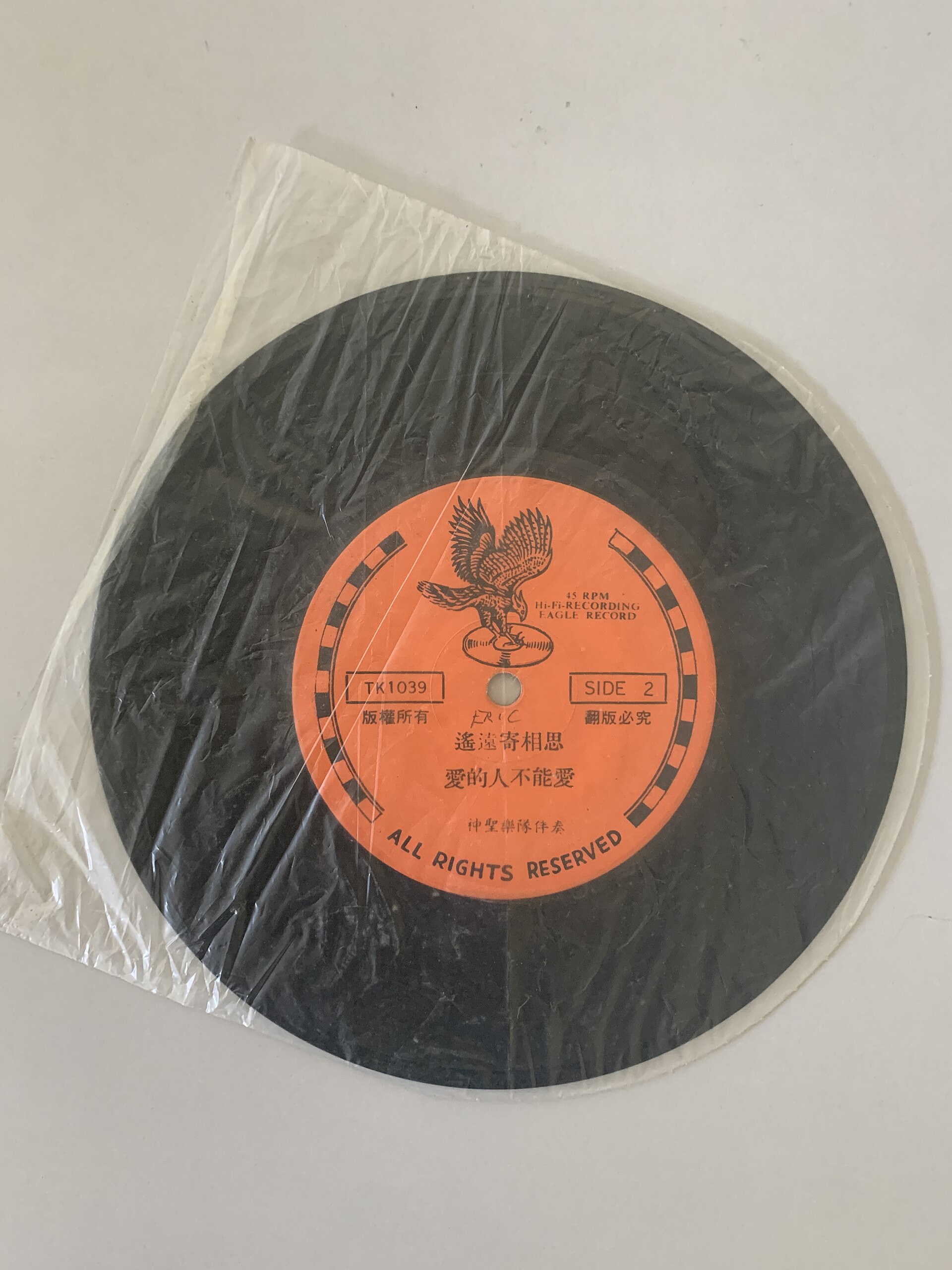
The surface of a paper inner sleeve is not smooth; repeated removal and insertion leaves fine scratches on the record surface.
The problem with paper inner sleeves is not any single removal or insertion, but accumulation. Paper fibers themselves have hardness. When the record is pulled out, what occurs between the fibers and the record surface is dry friction; if dust particles are also trapped in the sleeve, these particles are dragged along the grooves for a distance. A single microscopic scratch cannot be seen, but after dozens or hundreds of times, a layer of matte scratches appears on the record surface, especially obvious under side light. For how scratches affect grading, you can refer to the site's condition grading standards to judge.
There are several details worth mentioning separately:
- Bare paper is much more dangerous than lined paper. In paper bags with a plastic lining, what actually contacts the record surface is the film, and friction is much lower.
- Paper inner sleeves are often acidic. Long-term contact may cause slight changes where the record surface touches the sleeve body, so acid-free materials are generally recommended for preservation purposes.
- New records are not necessarily safe. Many newly released records still come with bare paper inner sleeves, and a brand-new record will likewise wear because of the inner sleeve.
In other words, the value of paper inner sleeves lies mainly in "support": it keeps the record in shape inside the jacket and makes it less likely to be bent. Handling this support and low friction separately is the reasonable approach.
Polyethylene Inner Sleeves: Best Versatility
Polyethylene (PE) inner sleeves are currently the most easily accepted choice: smooth surface, no record scratching, low unit price, and the most complete range of specifications. Its most obvious drawback is that it easily carries static electricity, thereby attracting dust. Dust itself does not directly damage the record, but during removal and insertion it becomes a medium for friction, so the static issue must be considered together with cleaning habits.
When choosing, look at three points; there is no need to look at promotional language:
- Thickness. Bags that are too thin form hard creases as soon as they wrinkle, which instead increases local friction during removal and insertion; bags with a little thickness make it easier for the record to slide in and out.
- Size. If the opening is too tight, it will scrape the edge of the record; if too large, it easily folds inside the jacket. Use the standard that it can easily hold the record while still leaving margin at the edges.
- Rebound. Gently rub it and then unfold it; good polyethylene will basically return to flat, while poor-quality bags will leave permanent wrinkles.
High-density polyethylene (HDPE) is usually stiffer and smoother than low-density polyethylene (LDPE), but both fall into the category of "low friction." What really needs to be avoided are extremely thin, easily wrinkled cheap sleeves: they cancel out the advantage of low friction with wrinkles.
If the record itself is statically charged, before changing the sleeve you can first treat the surface with a carbon fiber brush or an anti-static device, otherwise dust will be sealed into the new sleeve along with it. This is especially important in dry seasons.
Anti-Static Inner Sleeves: Structure and Use Cases
"Anti-static" does not refer to the same thing across different products. There are two common approaches: adding anti-static components to polyethylene, or making a multi-layer composite structure so that the surface can both conduct away charge and maintain low friction. There is also the approach of using translucent paper (often called rice paper or imitation rice paper) with a lining film, which feels relatively stiff and is suitable for records that need support.
It is not mysterious; it solves two specific problems:
- Attraction in dry environments. When humidity is low, static is obvious, and records will actively attract dust; anti-static sleeves can reduce this process.
- Scenarios with repeated removal and insertion. Records played frequently need the combination of low friction and low static more than records stored long-term.
It should be noted that "anti-static" is a descriptive term, not a unified standard. The way to judge is still to go back to the structure: whether there is a lining film, whether the edges are layered, whether the surface is smooth, and whether the sleeve is stiff. If a sleeve has no lining and feels just like bare paper, its actual performance will not change because of the name.
Be Cautious with PVC Inner Sleeves
PVC inner sleeves are transparent and stiff, and look high-end when placed in a jacket, but they are the only material on this list that needs to be actively removed. The risk comes from plasticizers: to keep PVC soft, plasticizers are added during production, and over long-term contact they may migrate to the record surface, forming a hazy mark that is difficult to remove. This change is usually irreversible, which means it is not dust and cannot be wiped away.
A few practical judgments:
- If you see a sleeve that is clearly transparent, hard and stiff, and slowly springs back after bending, first assume it is PVC.
- Picture discs, clear discs, and original sleeves of old records are high-risk combinations, because such records are often stored long-term and have longer contact time.
- Do not try to solve it by cleaning. Cleaning can remove dust and mold spots, but it cannot remove material changes that have already occurred.
- When replacing, check the outer sleeve as well, because some sets have an additional PVC outer sleeve outside the jacket, which is also something that needs to be replaced.
If a record was originally stored in a PVC inner sleeve, it is recommended to replace it with a polyethylene or anti-static inner sleeve as soon as possible and store the original sleeve separately. Once haze appears on the record surface, both playback performance and version value will be affected.
Two Exceptions Among Paper Sleeves
If you do not want to use plastic at all, there are also two types of paper-based options worth considering:
- Acid-free paper inner sleeves. The material is stable and does not shed crumbs, making them suitable for long-term storage, but friction is still higher than polyethylene, so removal and insertion should be slower.
- Poly-lined paper sleeves. The outer layer provides rigidity and shape, while the inner film provides low friction. This is the combination of "the support of paper plus the feel of film," and it is also the closest solution to having both.
There is one more point related to preservation: printed inner sleeves (original inner sleeves printed with lyrics or photos) are usually also paper. Their collectible value comes from the printed content, not from protective performance, so the correct approach is to keep them, but not let the record live inside them.
How to Match Outer Protective Sleeves with Inner Sleeves
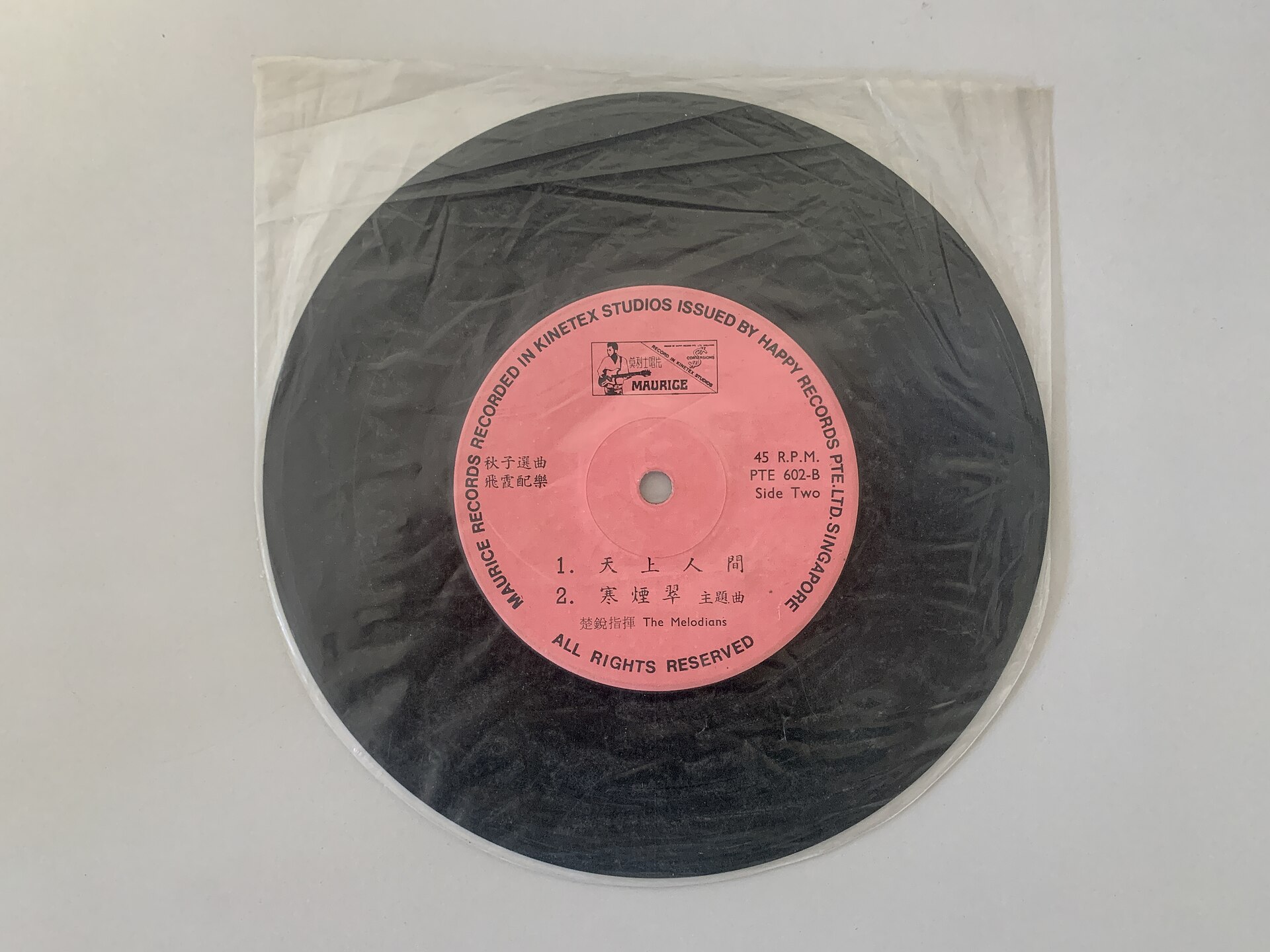
A common practice is an outer protective sleeve plus an inner low-friction inner sleeve, with the original inner sleeve stored separately.
A complete protection setup is actually divided into three layers, each with its own task:
- Inner sleeve: directly contacts the record surface and is responsible for low friction, low static, and not shedding crumbs.
- Jacket: the record's original outer packaging, responsible for support and information, and usually does not directly contact the record surface.
- Outer protective sleeve: goes outside the jacket and is responsible for blocking dust, fingerprints, and wear on the corners and edges of the jacket.
These three layers should not substitute for one another. Using an outer protective sleeve to solve an inner sleeve problem is meaningless, and the reverse is also true. A common efficient combination is: put the record into a new polyethylene or anti-static inner sleeve, put the original printed inner sleeve back into the jacket together with the record, and then put an outer protective sleeve on the outermost layer. In this way, the record gets low-friction contact, and the completeness of the collection is also preserved.
There is one detail about orientation: with the inner sleeve opening facing up and offset by about ninety degrees from the jacket opening, the record is less likely to slide out during handling. This habit reduces accidents better than any expensive accessory. When organizing a collection, doing sleeve replacement and re-filing together will be much more efficient. For specific methods, you can refer to the site's collection organization guide.
The Correct Steps for Changing Inner Sleeves
Changing inner sleeves looks simple, but if the order of operations is wrong, it is equivalent to creating scratches at the final step:
- Clean first. Do not change the sleeve when the record surface has dust, otherwise the dust will be sealed into the new sleeve.
- When taking out the record, only touch the edge and the center label, and do not press your fingers on the groove area.
- Use both hands together. Support the inner sleeve with one hand and gently push the record with the other, letting the record slide out on its own rather than pulling hard from the sleeve opening.
- Check the new sleeve. Confirm that there are no wrinkles, no dust, and no printing debris inside the sleeve.
- After inserting, expel excess air so that the sleeve fits closely, but do not make it so tight that it presses on the record surface.
- Put the original inner sleeve back into the jacket separately, outside the record's inner sleeve, to avoid it contacting the record surface again.
If you're changing many at once, it's better to do it in batches, and after each one, immediately record the catalog number, matrix number, etc. into your collection log, to avoid having to re-verify from memory later. Once this information gets mixed up, different versions of the same album can no longer be distinguished. For how to design record fields, there's an explanation on the site about managing your collection with GROVV.
When to Discard an Inner Sleeve
You don't have to wait for visible scratches. If any of the following signs appear, you can replace it right away:
- A slight rustling sound when pulling out the record, indicating the contact isn't smooth.
- Debris or powder on the inner walls of the sleeve.
- Obvious creases, deformed opening, or frayed edges.
- The sleeve has yellowed, hardened, or has a noticeable plastic smell.
- A hazy mark appears where the transparent sleeve sticks to the record surface.
The cost of inner sleeves is very low, while scratches on the record surface cannot be repaired. This is one of the few things in vinyl collecting where a small investment yields a definite return.
Frequently Asked Questions
Do new records need their inner sleeves replaced immediately?
If a new record comes with a plain paper inner sleeve, it's advisable to replace it before the first play. The new record surface is cleanest and most susceptible to scratches from paper fibers and dust. If it already comes with a lined paper sleeve or polyethylene sleeve, you can first observe its condition, but there's no need to keep using an obviously cheap sleeve just to "keep it brand new."
Are anti-static inner sleeves really effective?
They are effective for dust attraction caused by static, but not for existing scratches. Their purpose is to reduce future problems, so the criterion isn't "did the sound quality change after replacing," but whether insertion and removal are smoother and whether there's less dust inside the sleeve. In dry regions, during autumn and winter, and for records played frequently, the improvement is most noticeable.
Can fogging caused by PVC inner sleeves be repaired?
Usually not. It's not dirt attached to the surface, but a change that occurs between the material and the record surface. Cleaning can handle dust, mold spots, and fingerprints, but cannot restore an already fogged record surface. The only solution is to detect it early and replace it, so it doesn't continue to make contact.
Should printed inner sleeves also be replaced?
Printed inner sleeves are part of the collectible's completeness, especially for early releases and special editions. It's recommended to keep the original, but let the record live in a new low-friction inner sleeve, and put both back into the jacket. This way, you don't lose collectible value, and the record doesn't continue to rub against paper.
Which direction should the inner sleeve opening face?
Upward, and offset about ninety degrees from the jacket opening. This way, the record is less likely to slip out during upright storage and handling. If the jacket itself is already loose, adding an outer protective sleeve will be safer.
Final Thoughts
The inner sleeve is the cheapest and most easily overlooked part of the entire vinyl system. It won't make the record sound better, but it will determine what remains on the record surface after a decade or more. First distinguish the material, then choose based on the three dimensions of friction, static, and stability; the rest is just execution: replace what should be replaced, and note down what should be noted.
Image Credits
Photos in this article are from Wikimedia Commons, used under the licenses indicated for each image; diagrams are made by GROVV.
- The surface of paper inner sleeves is not smooth; repeated insertion and removal will leave fine scratches on the record surface: Unattributed · CC BY-SA 4.0 · Source
- A common practice is an outer protective sleeve plus an inner low-friction inner sleeve, with the original inner sleeve stored separately: Unattributed · CC BY-SA 4.0 · Source

