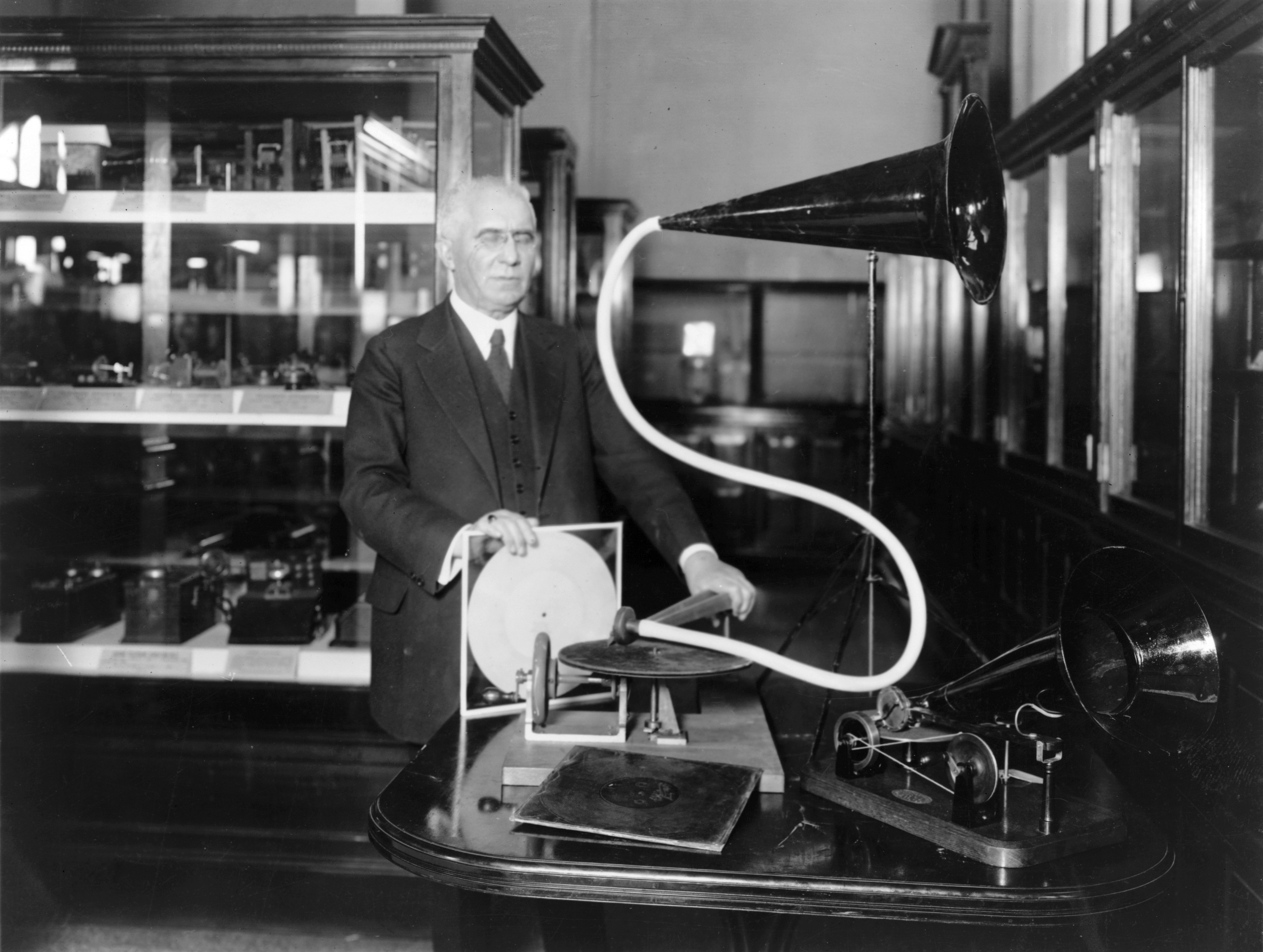
Emile Berliner and his early phonograph. Photo dated 1910–1929, Library of Congress. Image source

Placing a record on the turntable requires a few very gentle movements.
Fingers hold the edge, align the center hole with the spindle, let go, and then move the tonearm toward the outer groove. When the stylus drops, sometimes a faint, crackling sound is first heard in the room. Then, voices appear, instruments enter, and a performance long completed begins again from the start.
We have grown accustomed to such encounters.
The singer may be far away in another city, or may have already left this world.
We mostly have no way of knowing the weather on the day of recording, the furnishings in the room, or where the performers went after finishing work. But in a certain syllable, how he paused, how he slowly sang a line of lyrics to the end, can still be heard.
What a record preserves is a very specific small part of time.
Making these sounds into many records, entering stores, crossing oceans, and being taken home by different people, was a long task.
Emile Berliner stands at an important starting point in this history.
People sometimes call him the "father of the vinyl record." This title expresses respect, and also compresses several generations of technology into one.
What Berliner advanced was laterally cut disc records and gramophones, as well as the commercialization of this recording method; the familiar vinyl long-playing record LP was introduced by Columbia Records in 1948.
From Berliner's early records to the vinyl LP, there lies continuous improvement in materials, recording, manufacturing, and playback technology.
By preserving this distance, his story becomes clearer.
Before that thin, quiet disc became an everyday item, he and many others solved the problems of how sound could be preserved, how it could sound again, and how it could be heard by more people.
A young man who first learned to make a living
On May 20, 1851, Berliner was born into a Jewish family in Hanover.
His father was in business and also studied Jewish classics; his mother loved music. The family had many children, and life required each person to gradually take on their own part.
At the age of fourteen, he ended his schooling at the Samsonschule in Wolfenbüttel, and then took various jobs to help support the family. In 1870, he went to the United States and worked as a clerk in a drapery and general store in Washington. Later he went to New York to make a living and studied at the Cooper Institute in the evenings.
From these experiences, it is hard to find a prearranged path to becoming an inventor.
The work in the store needed someone to do it, and living expenses had to be earned bit by bit. Learning could only be fitted in between these things. For a young immigrant, seeking knowledge first meant being willing to give his attention to what he did not yet understand after an already quite exhausting day.
He also once did cleaning work in the laboratory of the chemist Constantin Fahlberg. Such a position was far from leading research, yet it gave him the opportunity to be close to the actual work in the laboratory.
We easily infer everything about a person's youth from the fame he later achieved, as if every job was waiting for the same answer.
Berliner's early experiences are better left as they were: a young man leaving his hometown, seeking work in a strange city, and trying to continue learning. He did not yet have a record company, nor a set of machines that would change musical life.
At that time, science was a place he was gradually approaching.
He first wanted distant people to hear clearly
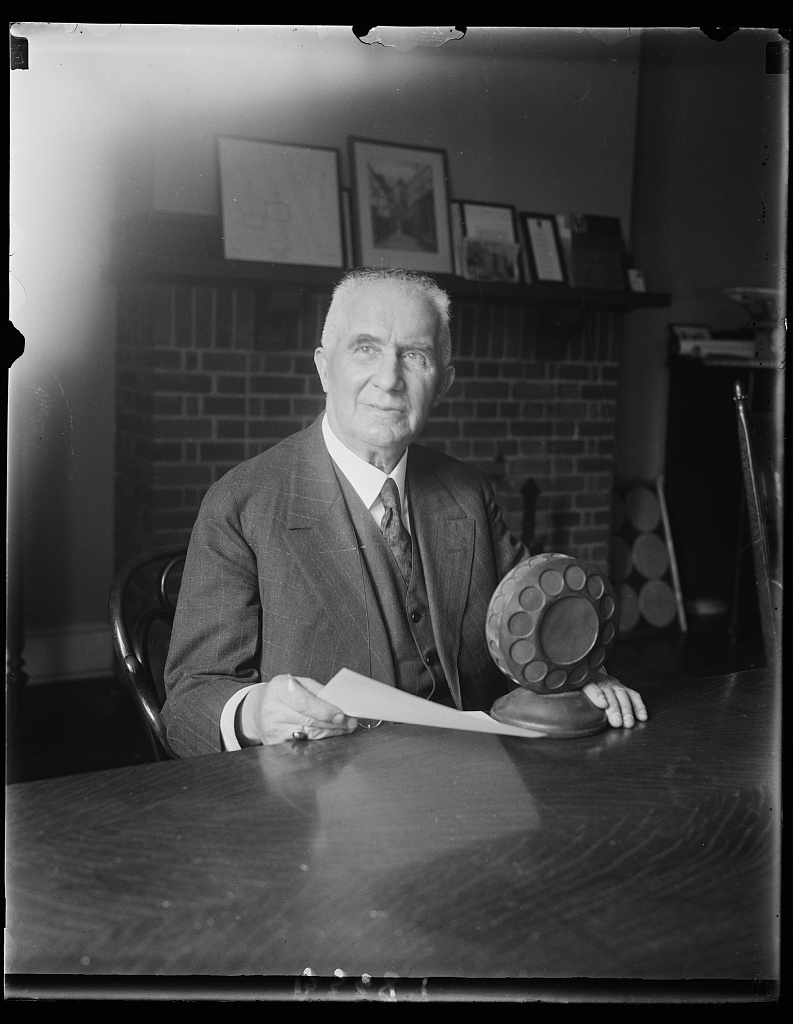
Berliner in 1929. Photo by Harris & Ewing, Library of Congress. Image source
The field in which Berliner first made important progress was the telephone.
In the 1870s, the telephone was bringing a new experience to people: the other party was not in the room, yet the voice could arrive along the line. But early devices still had many practical problems, and whether the voice could be transmitted clearly and loudly enough was one of them.
In 1877, Berliner developed an improved telephone transmitter, an early type of microphone. Bell's side noticed this work, then bought the related rights and hired him to participate in research.
The name "transmitter" sounds a bit distant, but its task is easy to understand.
When a person speaks, the air vibrates. The telephone needs to convert these changes into electrical signals that can be transmitted along the line, and then restore them to sound at the other end.
Each conversion step affects the result heard: a sentence may become softer, some details may blur, and a voice that was easy to recognize may lose its characteristics.
In a later microphone patent by Berliner, one can see the arrangement among the diaphragm, carbon blocks, and contact parts. The tiny movements caused by sound are placed into a structure that can affect the electric current.
This kind of work requires patience with small changes.
How the materials contact, how much a part moves, whether a seemingly insignificant position is suitable—all can affect whether the distant person can hear clearly. The telephone broke down a large desire—to let people separated by distance converse—into many small problems that could be dealt with one by one.
Berliner accumulated experience in such work.
In 1881, he became a U.S. citizen and married Cora Adler. In 1884, he left his job at Bell Company, returned to Washington, and began independent research. By 1886, he had started exploring the recording and playback technology that would later become his signature contribution.
Sound was still his concern.
This time, what sound needed to cross was also time.
Before Him
When Berliner began researching phonograph technology, the field had already been trodden by others.
In the 1850s, the Frenchman Édouard-Léon Scott de Martinville developed a device capable of recording the traces of sound vibrations.
That was an attempt to turn sound into visible lines; its initial purpose was observation and study, and it had no accompanying sound playback capability.
In 1877, Thomas Edison and his assistants produced a phonograph capable of recording and replaying sound. In December of that year, Edison and his party brought the device to the editorial office of Scientific American for a demonstration; the greetings emitted by the machine allowed those present to hear the practical effect of this new technology.
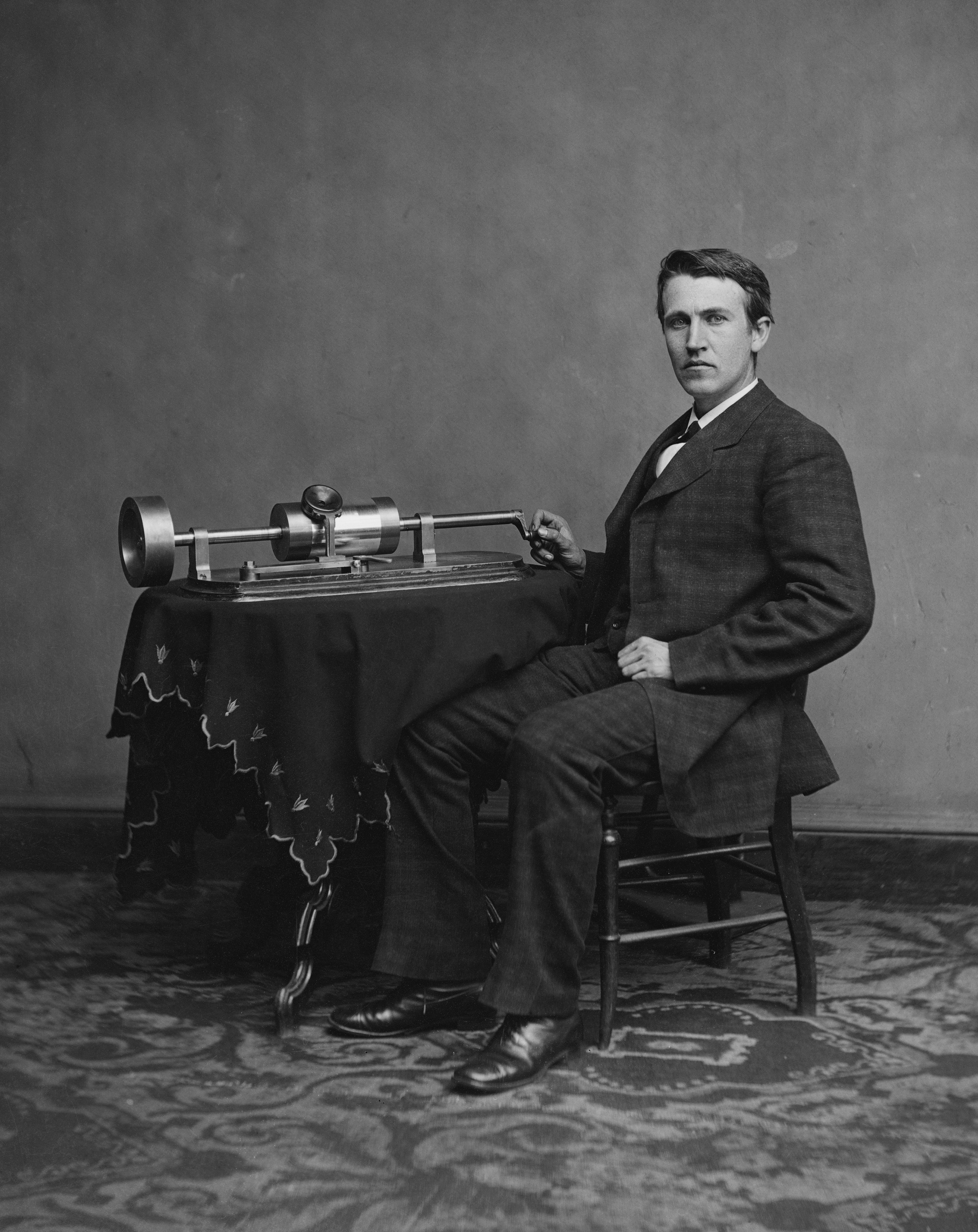
Edison with an early cylinder phonograph, circa 1877–1878. Original photograph held by the Library of Congress. Image source

For people today, "play it again" hardly needs explanation.
But at the time, the fact that words already spoken could reappear from a device was astonishing in itself. An action had ended, yet the sound it produced had not completely disappeared. People thereby gained an experience that had been difficult to have before: to go back and listen once more.
After the astonishment, the work had to continue.
How the machine was used, how long recordings could be preserved, what would happen with repeated playback, and whether production was convenient—these questions determined how far phonograph technology could go. Between success in experiments and everyday life, there was still a long distance.
Berliner entered precisely this distance.
He needed to face the existing devices and also understand the methods of predecessors. The story of the disc record is therefore always connected with cylinders, diaphragms, cutting styli, and earlier sound experiments.
The Stylus Changed Direction of Movement
One of Berliner's important choices was to make the stylus that recorded sound move laterally.
To understand this, one can first imagine a very narrow road.
Early cylinder recording commonly used vertical recording, expressing sound changes as variations in groove depth. During playback, the stylus moved up and down with these undulations. Lateral recording, by contrast, made the groove swing left and right as it advanced; the stylus moved along it, transmitting the side-to-side changes to the sound-producing component.
This refers to the basic difference between these two historical recording methods. Record technology later underwent many more developments, especially stereo, and the entire process cannot be summarized by such a simple diagram.
On November 8, 1887, Berliner obtained U.S. Patent No. 372,786, titled "Gramophone." The patent discussed lateral recording and methods for duplicating sound traces onto sturdy materials for playback.
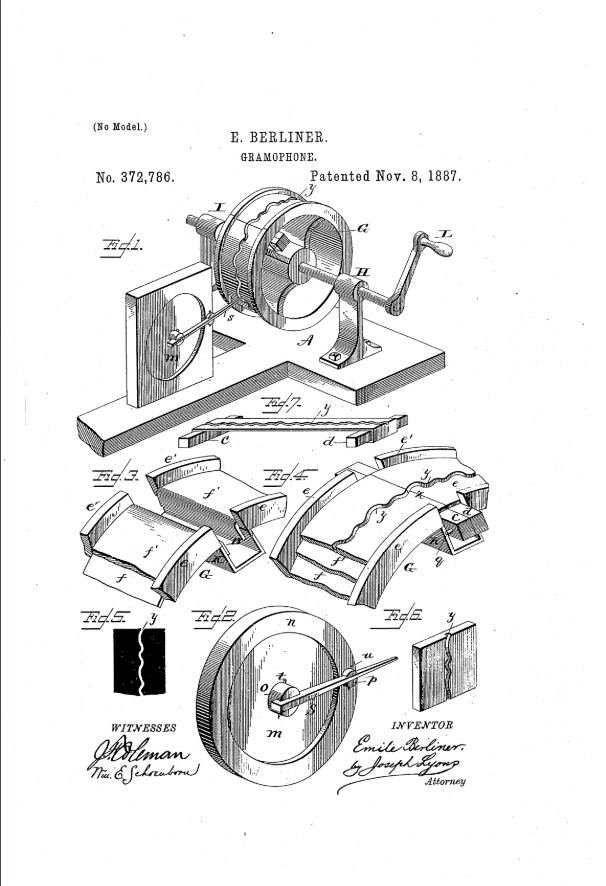
Berliner's "Gramophone" patent drawing, granted 1887, patent number US372786. Image source
It is worth noting that the drawing of this early patent still had an arrangement in which the recording sheet was mounted on a drum-shaped support. The turntable appearance we are familiar with today did not appear fully formed out of the blue in a single document.
A technology can first find its direction in principle, and then slowly adjust its shape.
For ordinary listeners, the direction in which the stylus moves seems like a very small matter. Once the music starts, people pay attention to melody and singing, and few would think in the middle of a lyric about how the diaphragm is moving.
But inventions often happen in such places.
Human feelings are large; engineering changes are small. After a detail is rearranged, materials can work in a different way, and a machine may also acquire a new structure.
Berliner gradually combined lateral recording with a flat disc. That winding trace of sound finally found a place more familiar to us.
A Segment of Sound Needed Chemistry's Help
Once there was direction, sound still had to be truly fixed onto the material.
In early recording, the cutting stylus had to work by means of mechanical vibrations caused by sound. Such force was very limited. If the recording surface was difficult to cut, the resistance of the material itself would affect the recording.
Berliner tried to accomplish this in separate steps.
In his etching method, the metal surface was first covered with a very thin protective film. The stylus vibrated with sound, cutting a trace in the film and exposing the material underneath. Then the etching liquid acted on the metal along these exposed lines, forming grooves that could be used for playback.
Patent No. 382,790, granted on May 15, 1888, explained this idea of direct etching in detail, including the preparation of the film, treatment of the surface, and how to reduce interference caused by dust.
Reading such documents, one finds that invention and everyday cleaning are sometimes very close.
Our imagined recording often begins when the singer opens their mouth. But before that, the surface must be prepared, the material must be suitable, and tiny impurities must be excluded as much as possible. Those steps that sound unrelated to music will ultimately enter the sound.
An inconspicuous defect may become something audible during playback.
From this perspective, early records were a very special kind of collaboration. The singer provides the sound, the air transmits the vibrations, the cutting needle leaves a trace, and the chemical process then helps it acquire a sufficiently clear shape.
If any part is not done well, that sound will be affected.
Later, the zinc experimental records used by Berliner entered the archives. They have different materials and purposes from the familiar black records, yet they preserve the early answer to the same question: how to make fleeting vibrations become traces that can be touched again.
To Make More Records
Making a playable record still leaves an important question before the record industry.
How can the same sound be delivered to more people?
If every additional copy of a recording requires the performer to do it again, the circulation of music is always limited by the number of recordings. Singing again and again also cannot guarantee that each time is exactly the same.
Berliner studied the method of making a stamper from the original recording, and then using the stamper to produce copies.
In a patent granted in 1895, he explained how to obtain a metal reverse mold from a zinc record, and through surface treatment to improve the durability of the mold, then press the groove shape into a suitable material. The originally recessed track becomes raised on the reverse mold, and then through pressing is restored to a playable groove.
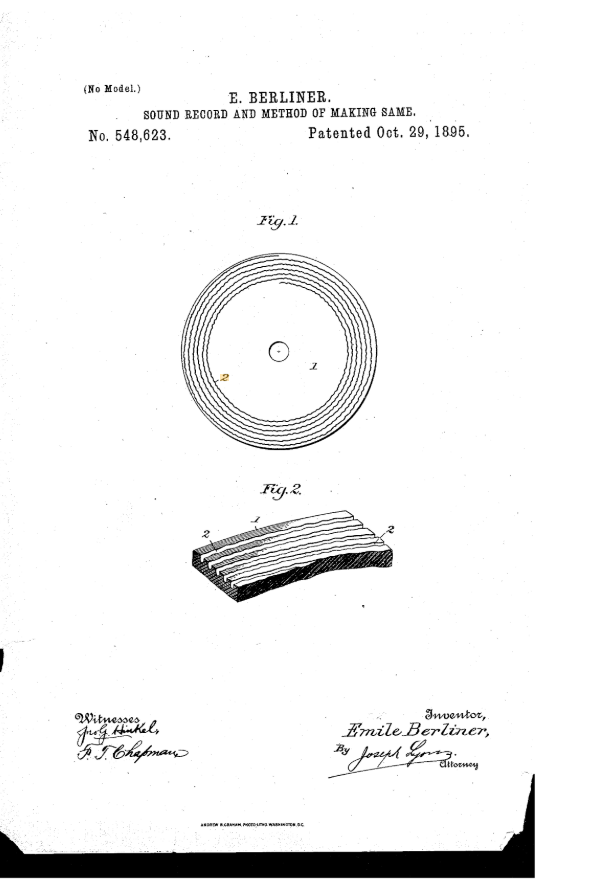
Patent drawing by Berliner for a method of reproducing sound records, 1895, patent number US548623. Image source
This conversion can be understood as passing on the shape of the sound.
The pauses, prolongations, and endings in the same performance thus have the opportunity to enter many copies. The copies are still affected by manufacturing and playback conditions, but they can come from the same recording.
For musical life, this is a very concrete change.
After a singer finishes singing in a certain room, the dissemination of the work can continue. Listeners do not have to appear in the same city as him, nor do they need to have the same ticket. As long as there is a suitable machine and a copy of the record, that performance may sound again in another place.
Berliner's important contribution to the commercialization of recording is closely related to this ability to copy.
However, cylinder technology also continued to improve. Entering the early 20th century, Edison also developed a batch replication process for molded cylinders. Therefore, "cylinders can never be copied" would write the difficulties of one stage as the unchangeable fate of the entire technology.
Berliner's achievement was already important enough under the conditions of the time.
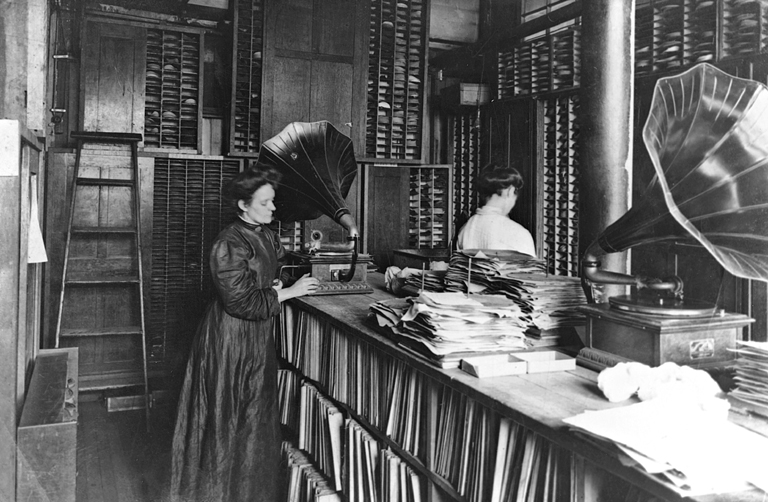
In 1910, the matrix room of the Berliner Gramophone Company in Montreal. Collection of the McCord Museum. Image source

The Earliest Discs Are Still Looking for a Suitable Body
The shape of sound can be copied, and next we must choose the material to carry it.
Berliner's early record production went through experiments and use of materials such as celluloid and hard rubber. Different materials have their own problems in forming, wear resistance, and manufacturing stability. In 1895, he cooperated with the Duranoid company, which manufactured products from shellac mixed materials, and turned to shellac formula record pressing.
Today when we talk about "old records," it is easy to picture a vinyl record in our minds.
But the color of a record cannot tell us its material.
Later, the long-popular shellac records had different physical properties from vinyl LPs. Shellac records are brittle and may break if dropped. By the 1930s, the common 10-inch, 78 rpm record could usually hold only about three minutes of music per side; 12-inch records could hold longer recordings.
This also reminds us that the world Berliner was building still has many differences from today's record-collecting life.
When we appreciate the weight, surface, and sound of an old object, we are also approaching the materials available at that time and the manufacturing costs people were willing to bear. The shape of technology always carries these conditions.
A beautiful idea must withstand repeated use.
The stylus will pass through the same groove again and again, the record will be taken off, put away, transported, and brought out to play again. It needs to retain enough recognizable sound after these actions.
Sound finally has a shape, and Berliner still has to continue to find a reliable body for this shape.
Human Hands Can Finally Let Go of the Crank
Early disc phonographs also had a problem that is easily overlooked today: rotation.
The Science Museum Group in the UK preserves a Berliner hand-cranked gramophone from about 1895, along with four five-inch records. The hand-crank mechanism and small-sized discs let us see an early form of this technology entering family life.
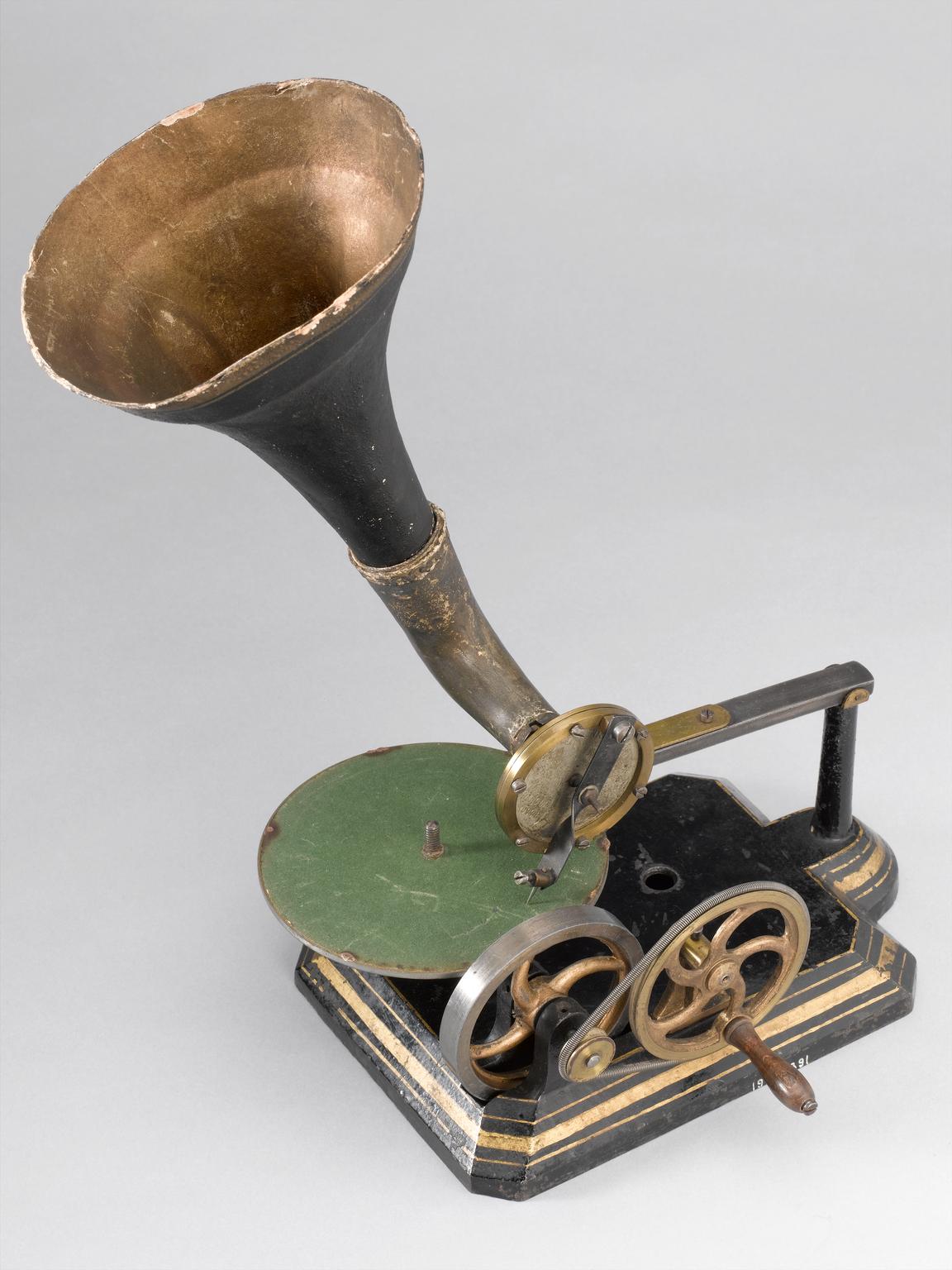
An early hand-cranked gramophone made by Kämmer & Reinhardt, circa 1890. The image shows a modern photograph of a museum piece, not the same unit as the circa 1895 item discussed in the text. Image source

Hand-cranking is a direct source of power, and it also tied listening to music to a continuous action.
The rotation speed of the record affects the speed and pitch of playback. If the hand turns a little faster, the sound changes accordingly; if the hand slows down, the music is affected too. The machine had to take on the work of stable playback; this task could not always be left to the user's wrist.
Eldridge Reeves Johnson, a mechanic working in Camden, New Jersey, took part in solving this problem. He developed a suitable spring-driven mechanism for Berliner's gramophone, freeing playback from continuous hand-cranking.
Such improvements rarely become the most conspicuous part of a music article.
It did not change the singer, nor did it add a new song, but it changed how listeners related to the machine. Once the spring was wound, a person could finally sit down and return their attention to the sound.
A product gradually maturing can often be seen in the movements its users no longer have to make.
Things that once required constant attention were partly taken over by the device. Only then did music have the chance to move slowly from technical demonstration to companionship in daily life.
Berliner's discs, his copying method, and the mechanical work of Johnson and others connect at precisely these points. Later collaborations in the record industry would repeatedly follow a similar process: some people solved recording, some solved manufacturing, and some made playback easier.
Those who remain first are not necessarily the most famous people
The machine could operate, and records could be made. What should be recorded next?
The world of early commercial recording was more miscellaneous than we imagine from classic record covers.
Berliner's catalog included popular and traditional songs, band performances, monologues, whistling, and instrumental solos suited to the recording conditions of the time. Many participants were not famous artists at first. Research by the Library of Congress also records that Berliner's assistant Fred Gaisberg noticed George Graham, a street medicine salesman, who later became a performer of recorded monologues.
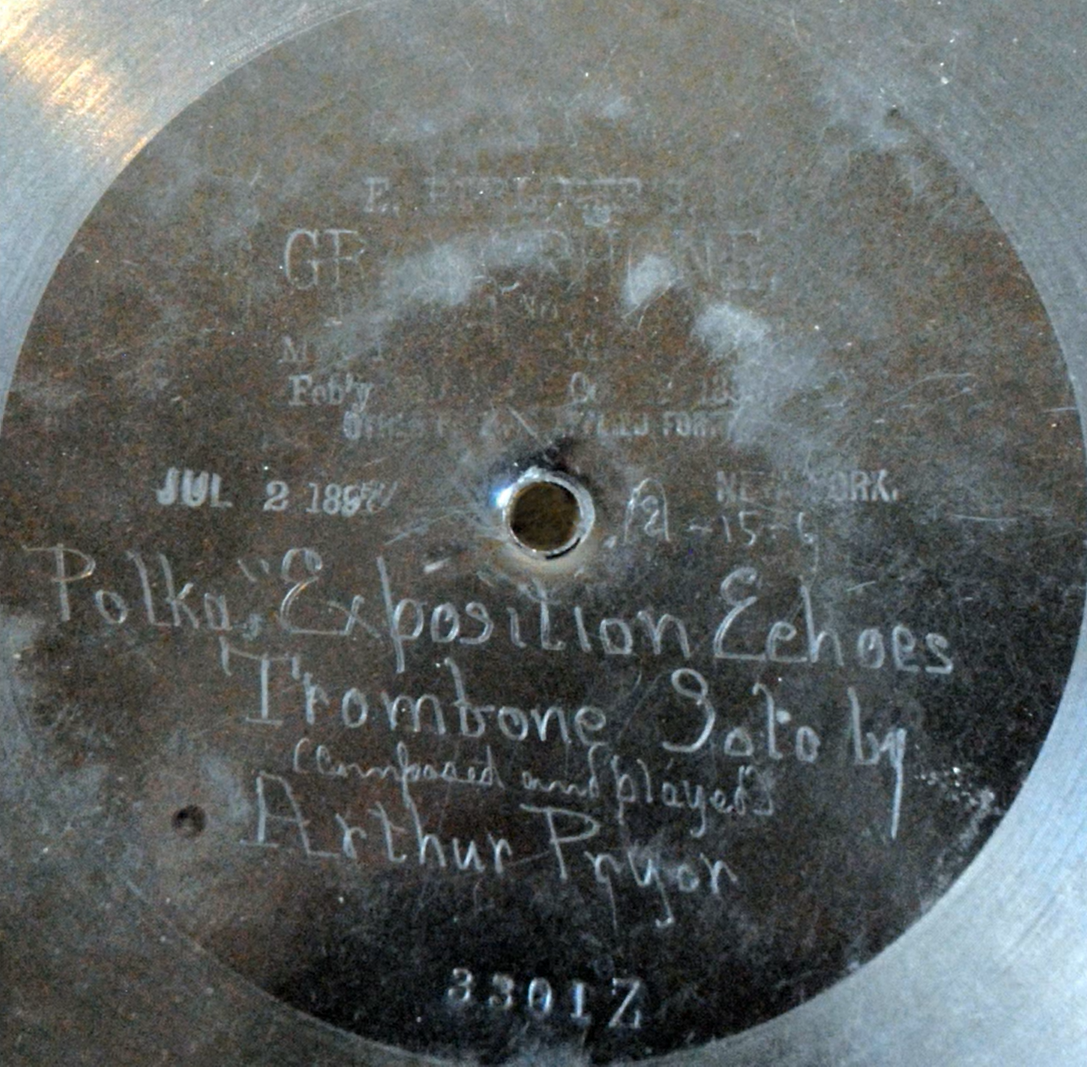
A record released by the Berliner company, catalog number 3301Z, featuring trombone playing by Arthur Pryor. Image source

This detail suddenly gives recording history the sound of the street.
Today we are used to looking for already recognized names on records, but when a new medium first appeared, it was also looking for performers suited to it. Who could speak clearly in front of a recording device, whose voice was easy to record, who could seize listeners within a limited time—all of these became practical questions.
Recording needed repertoire, and it also influenced the choice of repertoire.
A course from the Open University on early recording points out that the groove and playback structure used by Berliner records had characteristics suited to commercial production; however, whether a medium can grow also depends on people continually providing content for it.
From these early programs, I prefer to see a listening life in the process of taking shape.
Some people bought a song, while others wanted to hear a story or a piece of instrumental music full of virtuosic technique. What records gradually accumulated was the varied interests of many people. Recordings by famous artists would later become an important part, but in the rooms at the beginning there was room for more scattered, more everyday sounds.
They are worth preserving too.
A small disc requires a much larger business
When records began to circulate, the inventor's work became intertwined with another set of matters: funding, manufacturing, sales, contracts, and patents.
These words lack the lightness of music, yet they affect whether music can reach listeners.
A record can play successfully in the laboratory, but if manufacturing is unstable, if stores cannot get stock, and if playback machines cannot be supplied continuously, success is still difficult to scale. Between recordings and listeners, someone needs to build these connections, and participants need to reach arrangements over rights and interests.
Berliner's American business gradually developed in the 1890s, and then became entangled in a dispute involving the seller Frank Seaman. In June 1900, a court injunction dealt a fatal blow to the operations of the Berliner Gramophone Company in Philadelphia.
There is an easy temptation here: to write the story as a confrontation between an inventor and a villain, and to replace complex business relationships with a few emotionally charged words.
Leaving aside what can be confirmed is already enough to see the weight of this setback.
A technology was gaining a market, but that did not guarantee that its originator could always retain the original business. The machine could operate, yet a contract could still bring the business to a halt. The difficulties Berliner had to face had already gone beyond the laboratory bench.
In 1901, Johnson combined the Berliner patents he had acquired with his own technology and founded the Victor Talking Machine Company. It later became an important enterprise in the recording industry.
The path of the disc record continued forward.
Only looking back from this moment, one realizes that the continuity of technology and the continuity of an individual's career do not always happen in the same way.
His hometown also began to manufacture these sounds
Berliner's story always spanned the Atlantic.
He grew up in Hanover, went to the United States to make a living, and then brought the recording business connected with him back to Europe. By the end of the nineteenth century, the production and sale of records gradually linked different cities.
In 1898, the Deutsche Grammophon Gesellschaft was founded in Hanover. Berliner's brother Joseph played an important role in establishing and operating the factory there. The Hanover factory pressed records for the London-based Gramophone Company, while technology, equipment, and recording personnel flowed through this transnational network.
Regarding the specific founding process of the company, different historical sources differ in dates and personnel descriptions. The historical archives of the recording studio also specifically list these differences. Simply attributing everything to Berliner starting a company in his hometown would obscure the actual work of Joseph and others.
Berliner provided the important technological foundation, which gradually became production in the hands of relatives, collaborators, and operators.
We can understand the significance of this network from the action of "pressing."
Recording is done in one place, molds and equipment can be transported, records are produced in another city, and then sent to more stores. The journey of sound thus acquires a route different from the performer's body.
In 1902, Enrico Caruso recorded for the Gramophone Company in Milan. This type of recording by famous artists gradually established a closer relationship between disc records and international musical life.
During the same period, Berliner was also developing business in Montreal. The Quebec heritage archives record that he established E. Berliner of Montreal in 1900, and subsequently, his family members continued to participate in Canada's recording and manufacturing industry.
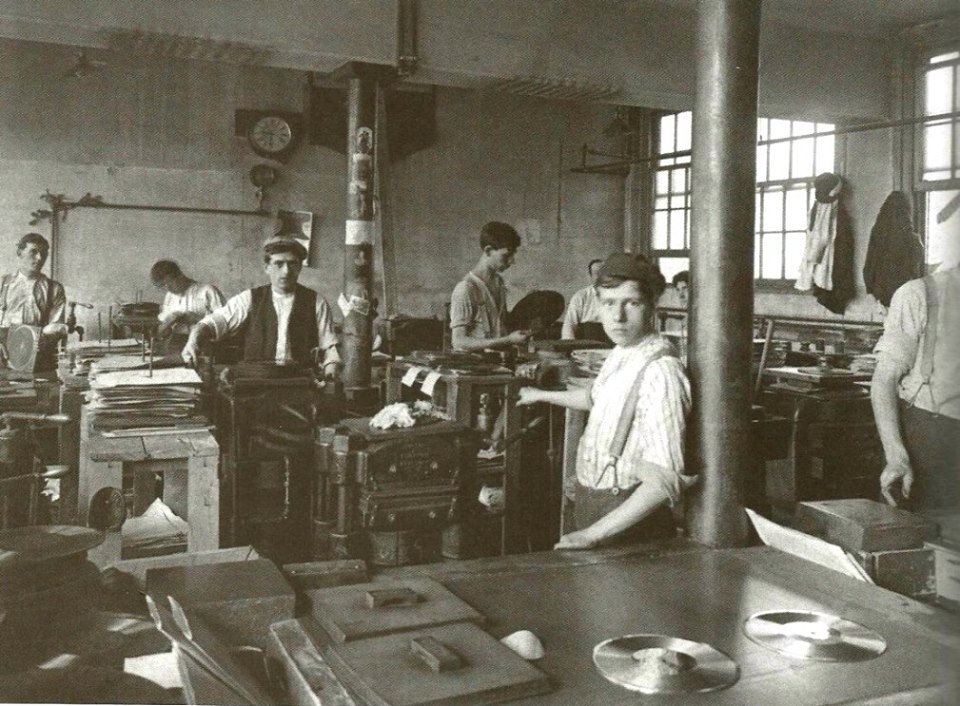
Inside the Berliner company factory in the Saint-Henri district of Montreal, 1910. McCord Museum collection. Image source

A young man's journey from years ago thus left unexpected echoes.
The places he visited, the cities where his family lived, and the factories established by his partners began to jointly participate in the circulation of sound.
That little dog left a question for records
In this industrial history, there is also a painting more easily remembered than many company names.
A little dog tilts its head, gazing at the horn of a gramophone.
It is called Nipper. This painting by British artist Francis Barraud later became famous as "His Master's Voice." The original painting featured a cylinder phonograph, but during commercial adoption, it was changed to a Berliner-style disc gramophone. The American rights to the image passed from Berliner to Johnson and became an important trademark for Victor.
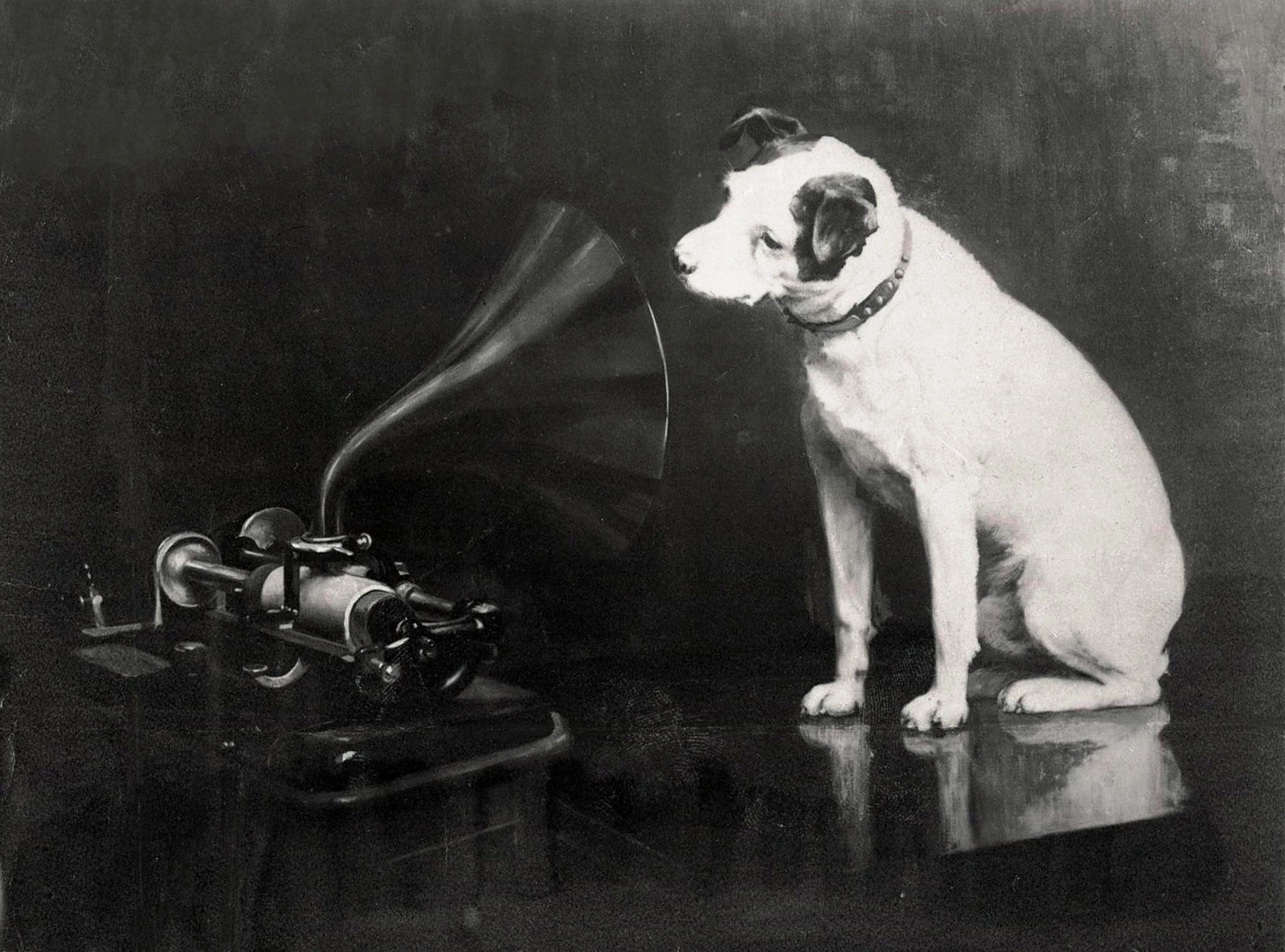
Nipper by Francis Barraud. In the early version, the dog faces an Edison Bell cylinder phonograph. Image source

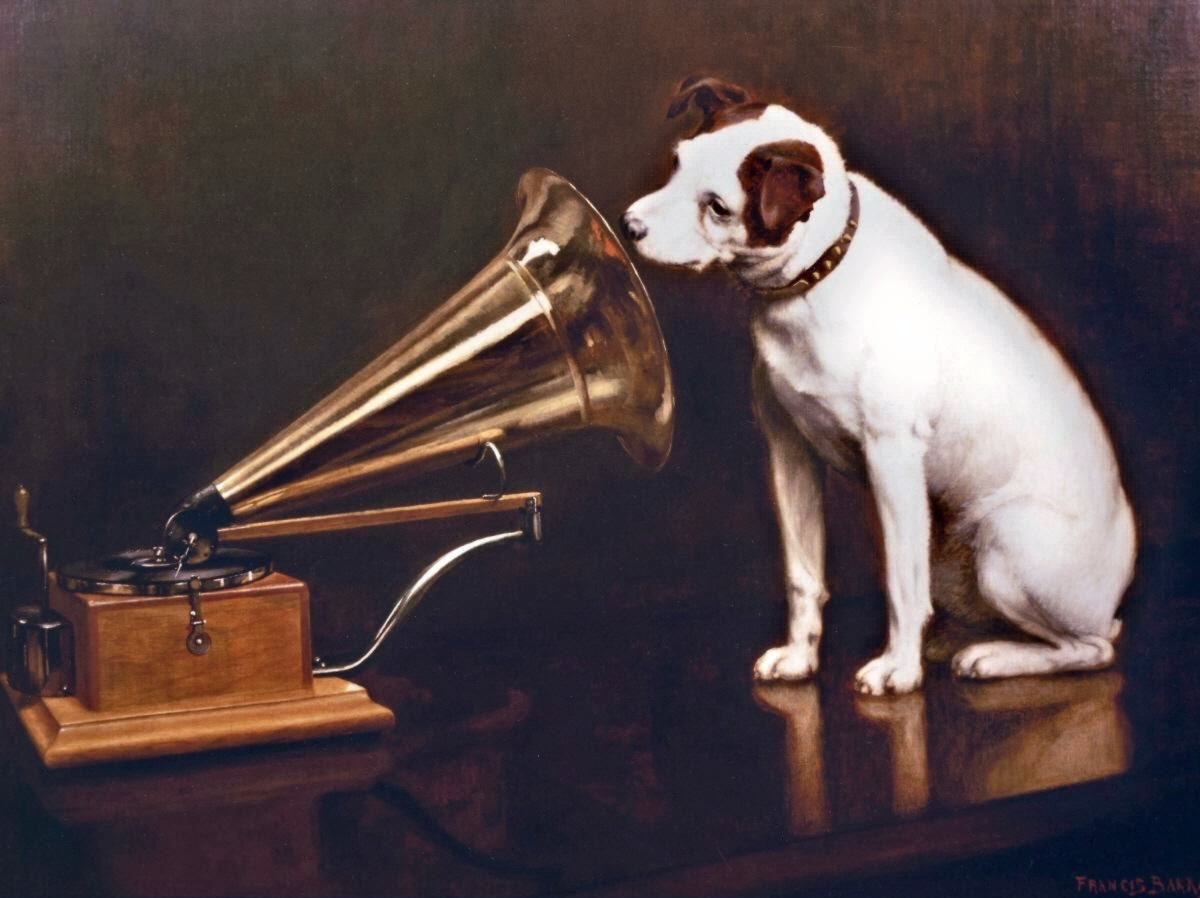
The disc gramophone version of "His Master's Voice." The image of the dog and the horn later became a widely recognized symbol of the record industry. Image source

We cannot answer from a painting how the dog understands the sound from the machine.
But this painting does make one question about recording visible: sound and the person making the sound can now appear separately.
There is sound in the horn, but the person is not in front of it.
This experience is equally complex for humans. We may come to know a singer we have never met through a recording, or hear a familiar person again after many years. Sound retains clues to identify a person, but cannot return the entire live scene.
The little dog in the painting stops there, not in a hurry to leave.
Its posture gives a technology composed of stylus, molds, and power devices an easily understandable emotion. Listeners will want to come closer, want to confirm, and be willing to listen a little longer.
An industry needs a trademark, and a good trademark sometimes unintentionally leaves behind questions more enduring than advertisements.
He still cared about how sound enters a room
After the commercial recording business changed, Berliner continued to engage in other research.
One of these works was still related to hearing: architectural acoustic materials.
The shape and surfaces of a room affect the sound within it. Speech may be unclear, echoes may be excessive; even if the person on stage speaks earnestly, the audience may not easily understand. Berliner researched materials used to improve indoor acoustics and obtained a patent for acoustic bricks in 1926.
From the telephone to recording, and then to rooms, there is an understandable connection between these works.
What he repeatedly faced was how sound passes through an actual system and finally reaches the ear. This system is sometimes a line, sometimes a record, and sometimes the hall where the audience sits.
He also researched helicopters with his son Henry. Relevant materials preserved by the Smithsonian Institution record the father and son's attempts in power, lift, and control, and clearly present the limitations of those experimental machines. They made progress, but were still far from a mature and reliable practical helicopter.
These experiences do not need to be piled into a string of dazzling titles.
Some research led to successful products, while others left behind experimental machines and problems that were not completely solved. For someone long engaged in invention, life would naturally include such differences.
What we see on records are the results that have been left behind. The archives remind us that around those results, there are still many directions for further attempts.
Beyond Records, There Is Also the Lives of Children
Berliner was also long involved in public health affairs, concerned with children's health, and supported the promotion of hygiene measures such as milk pasteurization.
Muddy Jim and Other Rhymes, published in 1919, preserves a concrete example of his participation in such work.
This is a children's hygiene education picture book, containing twelve related nursery rhymes. Berliner wrote the verses, and J. A. Whiteford drew the illustrations. The book also includes supplementary hygiene knowledge materials provided by Dr. George Kober.
A man who once designed grooves for sound also took the time to write easily memorable sentences for children.
This matter does not need to be interpreted as some kind of destined unity. A person can care about several things at once: whether a machine is easy to use, whether the people in the room can hear clearly, and whether children can grow up healthy.
Together they constitute a person's life.
In 1924, Berliner also established a health education institution in Washington to spread public health knowledge.
At this point, the person summarized as the "Father of the Record" already has a somewhat broader outline.
Titles are convenient for memory, but they cannot contain a person's entire time. The picture books, experimental devices, and public affairs records left in the archives show us where else he put his energy.
In 1929, he received the Franklin Medal, honoring his life's inventive work. On August 3 of the same year, Berliner died in Washington at the age of 78.
Disc records had already moved forward, and he did not see the complete vinyl era that followed.
That Page of Vinyl Would Be Turned by Those Who Came Later
Nineteen years after Berliner's death, Columbia Records introduced the long-playing record.
The LP, launched in 1948, plays at 33⅓ revolutions per minute. A twelve-inch record can hold about twenty-three minutes of sound per side. Peter Goldmark and the engineering teams at Columbia and CBS played important roles in the development of this format.
Several of these elements already existed, including lower speeds, vinyl materials, and attempts to extend playing time. What the Columbia team accomplished was to combine these technologies into a package that could be successfully brought to market.
Longer playing time changed the continuity of listening.
When a side of a record can hold a more complete musical passage, listeners do not have to get up as often to change records. Works can unfold in the room for longer, and a mood that has been established has a chance to continue.
Later, recording, cartridges, stereo, and manufacturing processes continued to develop. The vinyl records we hold today carry on the work of many people.
Therefore, when looking back at Berliner, we need to see both inheritance and distance.
He did not invent everything that came later. His important contribution was to give lateral-cut discs, reproducible recordings, and commercial playback systems a foundation for practical development at the end of the nineteenth century. Later technologies continued to modify along this path, and only then formed the record life we are familiar with.
Knowing this does not diminish the emotion when the stylus drops.
In those few seconds, even more people who participated in this matter are present.
Listening Again Is a Daily Routine That Came Later
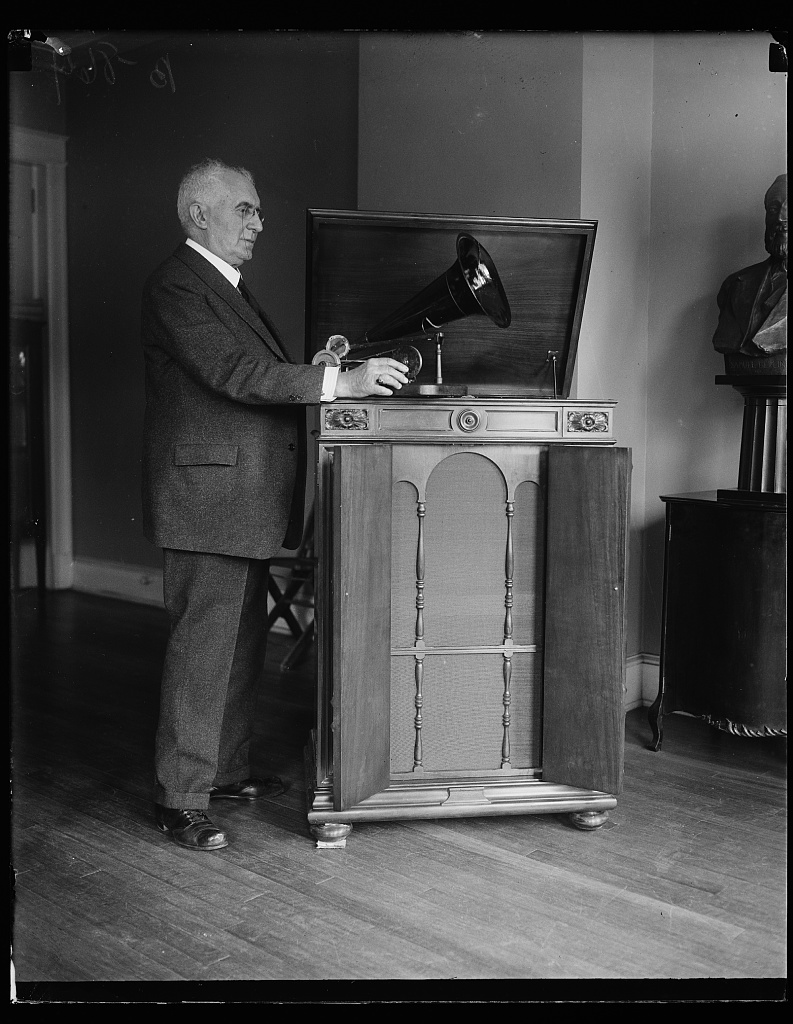
In 1927, Berliner posed with an early phonograph and a Victor Victrola Credenza. Photograph by Harris & Ewing, Library of Congress. Image source
Today, when we pull an album from the record shelf, we usually do not think of Berliner.
What we care about may be the voice of a singer when young, a live performance, or a song that has accompanied us for many years. The record has its own wear, the corners of the sleeve have creases, and one side may be especially familiar because it has been played often.
Once these objects enter life, they gradually acquire meanings unrelated to their makers.
The same batch of pressed records: someone first heard it while moving, someone gave it as a gift, and someone else encountered it in a thrift store many years later. The recording comes from the same performance, but the listening happens in different lives.
This is probably the most moving aspect of reproduction.
It allows the same passage of sound to have many different encounters.
The technology that Berliner helped establish ultimately arrived at a place like this: a person finishes a day's work, returns to the room, chooses a record, and gently lowers the stylus. He does not need to know every patent, nor does he need to figure out exactly how sound returns along the groove.
The machine handles most of it.
The remaining time can be used for listening.
When a side ends, the music fades, and the turntable continues to spin. We get up, return the tonearm to its place, and hold the edge of the record. That performance ended long ago, and has just ended again in this room.
If we want to hear it again, we put it back to the beginning.
Main References
- Library of Congress: Emile Berliner Biography: Early life, telephone research, independent research, and other work.
- Library of Congress: Emile Berliner Collection Finding Aid: Biographical timeline, recording materials, and archival composition.
- Engineering and Technology History Wiki ETHW: Emile Berliner: Technical career, public health involvement, and birth/death information.
- Franklin Institute: Case Files—Emile Berliner: Inventive contributions and award records.
- 1887 Patent US372786A: Lateral recording, durable material reproduction, and playback concepts.
- 1888 Patent US382790A: Direct etching method for sound recording.
- 1895 Patent US548623A: Metal stampers and record reproduction methods.
- Library of Congress: The Gramophone: Material evolution, market development, and commercial disputes.
- Library of Congress: The Berliner Recordings: Early repertoire, performers, and record characteristics.
- National Park Service: Origins of Sound Recording—Thomas Edison: Edison's 1877 recording and playback work.
- Library of Congress: History of the Cylinder Phonograph: Cylinder technology and later molded reproduction.
- Johnson Victrola Museum, Delaware: Spring-driven operation, Victor Company, and the Nipper trademark.
- Deutsche Grammophon Company History and Emil Berliner Studios Historical Archive: European production network, Joseph Berliner's role, and discrepancies in founding historical records.
- Quebec Cultural Heritage Archive: Berliner, Emile: Montreal operations.
- Library of Congress: Inside the Archival Box—The First Long-Playing Disc: Technical background and production archives of the 1948 LP.