At a certain stage of collecting, sooner or later you'll encounter two types of items on the shelf that make you hesitate: 7-inch small records with a large hole in the center, and old records that are thick, brittle, and feel like ceramic tiles when you pick them up. They are both called "records," yet they hardly share the same set of operating rules.
To determine how to treat a record, you only need to ask three questions: What is its material, how wide are the grooves, and what speed and equalization does it need? The material determines whether alcohol can be used for cleaning and whether it can be stacked; the groove width determines which stylus to use; the speed and equalization determine whether it plays back with its original sound. Once these three questions are answered clearly, the arrangements for equipment, cleaning, and storage will follow suit.
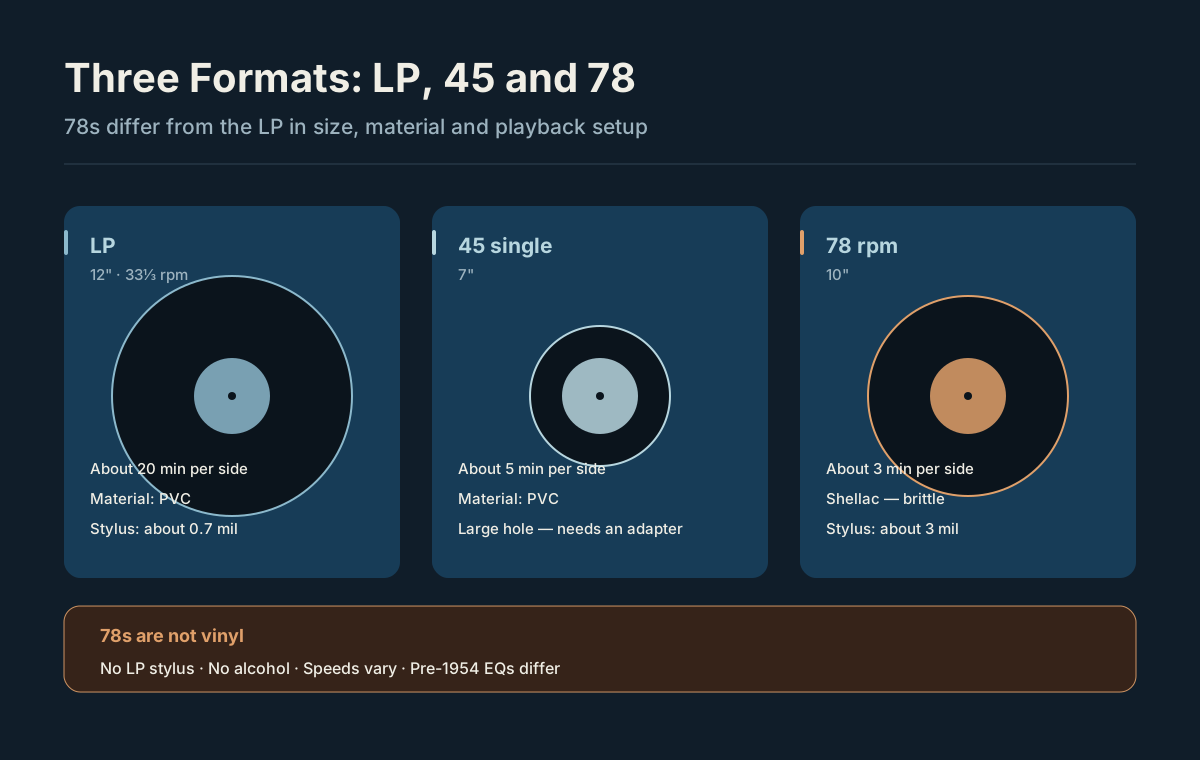
Illustration: 78s are shellac records, not vinyl.
Key Points at a Glance
- Most 78s are not vinyl but shellac records: the material is more brittle, the grooves are wider, and they require a coarse stylus of about 3 mil.
- LPs and 45 RPM singles are mostly PVC microgroove records, with a stylus tip radius of about 0.7 mil (early mono records often used 1.0 mil); mixing the two types of styli will damage records, and a coarse stylus pressed into microgrooves is especially dangerous.
- The speed of 78s is not exactly 78; the actual speed of early records fluctuates around the nominal value, so equipment that can fine-tune speed has an advantage.
- The RIAA equalization curve only became a universal standard around 1954; earlier records were cut according to each label's own curve.
- Cleaning methods must be differentiated by material: shellac fears alcohol, while PVC can withstand common record cleaning fluids.
- The value of 45 RPM singles often comes from B-sides, regional versions, promotional copies, and picture sleeves, rather than the hit song itself.
Basic Differences Between the Three Formats
When you look at the three common formats side by side, the differences become clear:
- LP (12-inch, 33⅓ RPM): The main carrier for albums, microgroove, PVC material, about 20 minutes per side.
- 45 RPM single (mostly 7-inch): Usually one to two songs per side, with a large center hole that requires an adapter or a dedicated spindle.
- 78 RPM (mostly 10-inch, also 12-inch): Coarse groove, mostly made of shellac; about 3 minutes per side for 10-inch, about 4 to 5 minutes for 12-inch. It remained mainstream into the 1940s and only faded out in the mid-to-late 1950s.
What really determines the playback method is the groove, not the diameter. LPs and 45s both belong to microgroove: the grooves are narrow and densely packed; 78s are coarse groove, several times wider than the former. The stylus tip must match the groove width: a fine stylus dropped into a coarse groove will sink to the bottom, fail to support the sound track, sound muffled, and easily scratch the groove walls; a coarse stylus dropped into a microgroove is like plowing straight through the record.
This rule also explains why 45 RPM singles, although they look much smaller than LPs, can use the same stylus; while 78s, although close in size to a 10-inch LP, must have the stylus changed. Size is not the criterion; the groove is.
78s Are Not Vinyl
This is the point that needs the most emphasis. What we commonly call "vinyl" refers to PVC records, while most 78s are made of shellac, which also contains mineral fillers to increase hardness. This material brings several characteristics that must be remembered:
- The material is more brittle. It tends to shatter when dropped, rather than bend and deform like PVC. Treat it as fragile during transport and storage.
- The grooves are wider. It requires a coarse stylus of about 3 mil. Using an LP's 0.7 mil fine stylus will land at the bottom of the groove, resulting in muffled sound and possible record damage.
- The surface "shh" noise is normal. Early records were played with steel needles on mechanical phonographs, and combined with the granularity of the filler itself, surface noise is almost an inherent background for such records. When judging condition, focus on pops, skips, and severe wear, not on complete absence of noise.
- There are exceptions with vertical cut. Lateral cut had already become the mainstream for records by the 1920s; during the same period, vertical cut (hill-and-dale) systems also existed, such as Edison's Diamond Disc and some Pathé products, which require dedicated equipment and will not produce normal results with an ordinary stylus. When encountering strange sounds from early records, first confirm the cutting method before suspecting record damage.
Speed and Equalization: Two Sets of Playback Variables That Are Easy to Get Wrong
"78 RPM" is a customary name, not a precise engineering specification. In the electrical recording era, synchronous motors and gear ratios were used to derive speeds, resulting in actual values like 78.26 RPM; while in the earlier mechanical recording era, different labels' nominal speeds fluctuated in a range close to 78, some marked 76, some marked 80.
The practical impact for collectors is: when playing early records, the speed should be adjustable rather than fixed at 78. The method of judgment is also direct—listen to voices. When the speed is too high, the pitch of voices sounds tense and high; when too low, it sounds muffled and sluggish. Using a familiar solo or piano piece as a reference is more reliable than trusting the dial.
The relationship between speed and recording duration is also worth noting. 78s have only about three minutes per side, which is a result of physical limitations; 45 RPM singles lower the speed to 45, in exchange for wider groove spacing and greater dynamic headroom, so singles from the same era often sound louder and more impactful than LP versions. This is also why some masters are re-cut at 45 RPM. For the history of speed standards, you can refer to Battle of the Speeds.
Equalization Curves: No Unified Standard Before 1954
When records are cut, low frequencies are attenuated and high frequencies are boosted to avoid excessive groove excursion; during playback, the reverse process must be applied, and this reverse process is the equalization curve. The problem is that the RIAA curve only became an industry-wide standard around 1954, and earlier records were cut by various labels using their own curves.
This means: playing early 78s with a modern phono stage that only supports RIAA may result in sound that is too bright or too dark, and bass that is too thin or too thick. This is not because the record is damaged, nor because your equipment is poor, but because the curve does not match. You can refer to the explanation of the RIAA equalization curve to understand the technical background.
Practical approaches fall into three tiers depending on conditions: if you have a phono stage with adjustable equalization, try several curve settings based on era and label; if you only have RIAA, accept the difference; when doing digital transfers, you can also use software equalization to correct it afterward. It should be noted that when you hear sound that is too bright, do not immediately judge the record's condition as poor—deviations caused by curves are consistent across the entire frequency range, while noise caused by wear is localized and intermittent.
Collecting Logic of 45 RPM Singles
The value of 7-inch singles often lies not in the album tracks, but in the version differences they carry:
- B-side tracks: Some versions include songs not on the album, or use different mixes.
- Regional versions: Pressings, covers, and track sequencing may differ between countries, and the same song may be handled differently in different markets.
- Promotional copies: White-label or specially marked promo versions usually have small pressing quantities and circulate between radio stations and record stores.
- Picture sleeves: Early singles were mostly plain paper bags or company sleeves, and versions with picture sleeves receive more attention; the condition of the sleeve itself also directly affects value.
- Center hole specifications: Large holes were mainly for changers and jukeboxes, so they are common on US singles; small-hole versions are common in the UK and Europe. The same single may exist in both specifications.
- Pressing material differences: Some US singles were pressed on styrene, which wears more easily than PVC, and high-frequency loss appears earlier.
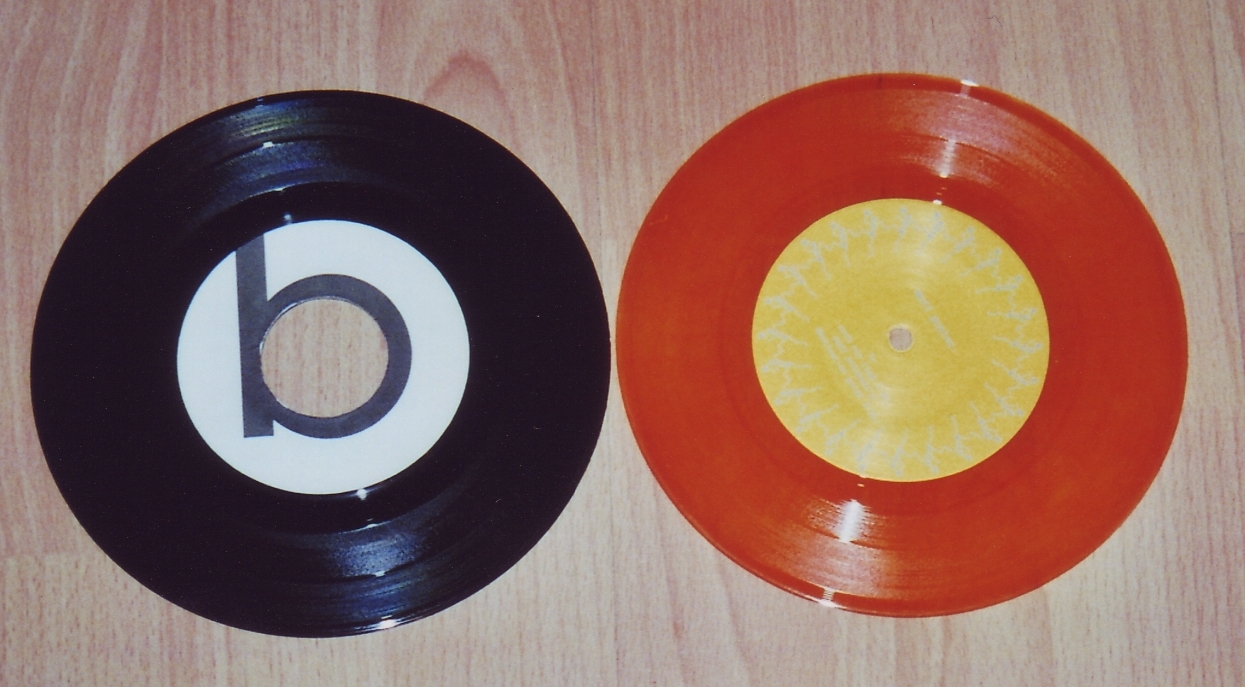
7-inch singles come with either large or small center holes; large-hole versions require a center adapter.
The condition assessment for singles is the same as for LPs, but because the disc is smaller and playback time is shorter, the impact of a single scratch is more concentrated. A full side lasts only a few minutes, so which segment a scratch falls on and how long it covers will be more noticeable proportionally than on an LP. When selecting, it is worth examining the specific revolutions the stylus will pass through. For complete condition grading standards, you can refer to Discogs' grading guide and the Vinyl Condition Grading Guide.
Condition and Versions of 78 RPM Records
The collecting logic for 78s differs greatly from LPs, because they were produced earlier and there is less verifiable information.
- The label determines a large part of the value. The label, label background color, typography, and catalog number are the main basis for determining era and version.
- Do not use "older means more valuable" as a judgment. The surviving quantities of 78s vary enormously; some records that sold in huge numbers back then are still common today; value is concentrated in a few specific recordings, specific artists, and specific labels.
- Auditioning costs are high. A 78 playback setup is itself a barrier, so many transactions rely on the seller's description and the buyer's experience.
- Surface noise should be viewed separately from damage. Inherent background noise is a material characteristic, while pops and skips are damage; their price implications are completely different.
Equipment and Accessories
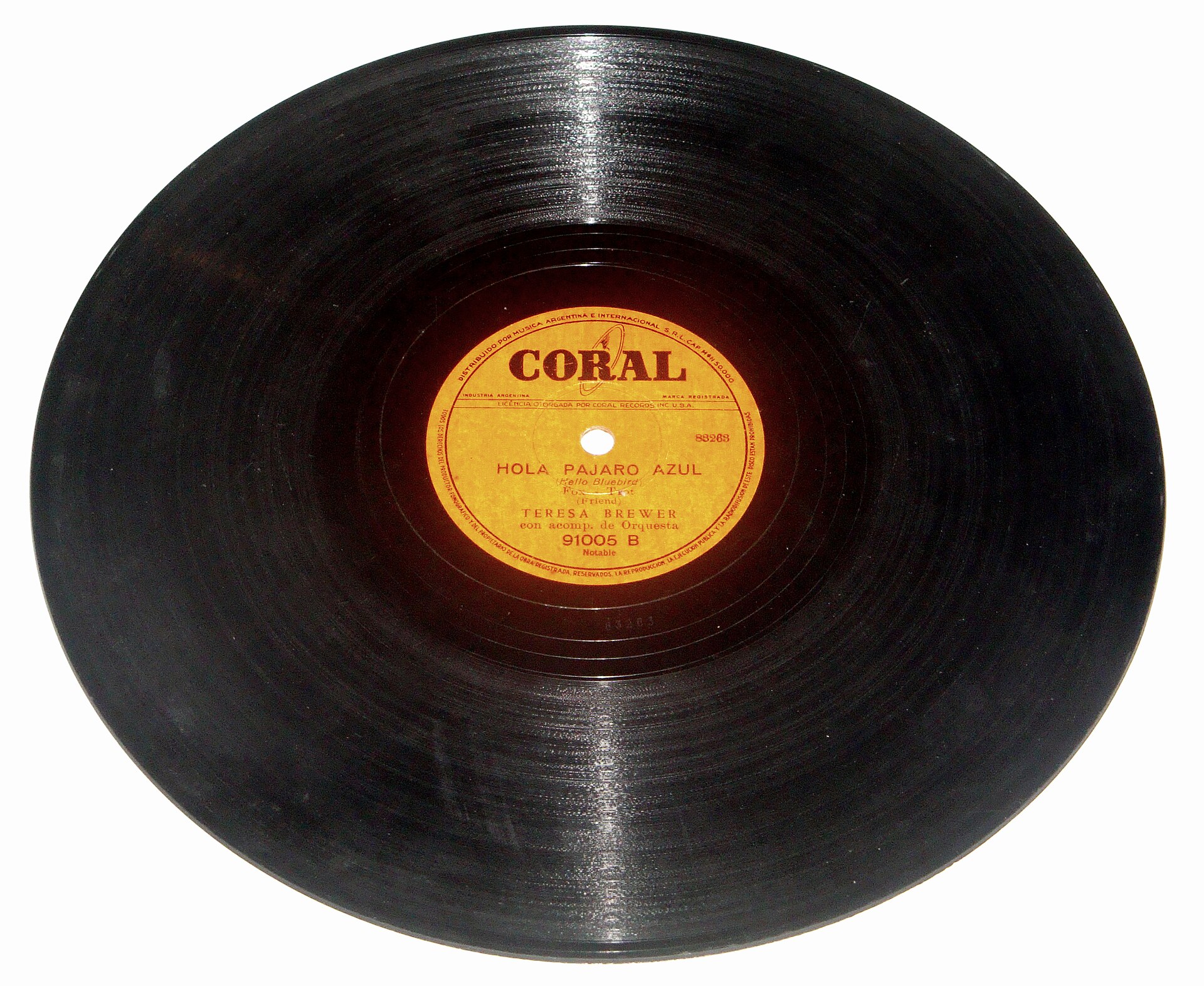
78s are mostly 10-inch shellac records, which are more brittle and require a thicker stylus.
If you collect both LPs and 78s, equipment preparation cannot be skipped:
- Interchangeable styli. Prepare a microgroove stylus around 0.7 mil and a coarse groove stylus around 3 mil, corresponding to PVC records and shellac records respectively; never mix them.
- Interchangeable cartridge or dual-cartridge setup. 78s are mostly mono recordings; using a mono cartridge is often more suitable than a stereo cartridge and makes it easier to achieve stable tracking.
- Mono switch. When playing mono records, summing to mono can reduce some noise; this is the easiest sound quality improvement.
- Center adapter. Needed for playing 7-inch large-hole singles; usually a small insertable disc, and there are also forms that fit over the spindle; worn adapters can cause the record to wobble slightly, so it is worth keeping several spares.
- Speed switching and fine adjustment. Confirm that the turntable supports 45 RPM and 78 RPM; if it has fine adjustment, playing early records will be noticeably more relaxed.
- Adjustable equalization. When collecting records from before the 1950s, the improvement from adjustable equalization is usually more direct than changing cartridges.
- Separate cleaning tools. Use brushes for shellac and brushes for PVC separately to avoid transferring particles from coarse grooves to fine-groove records.
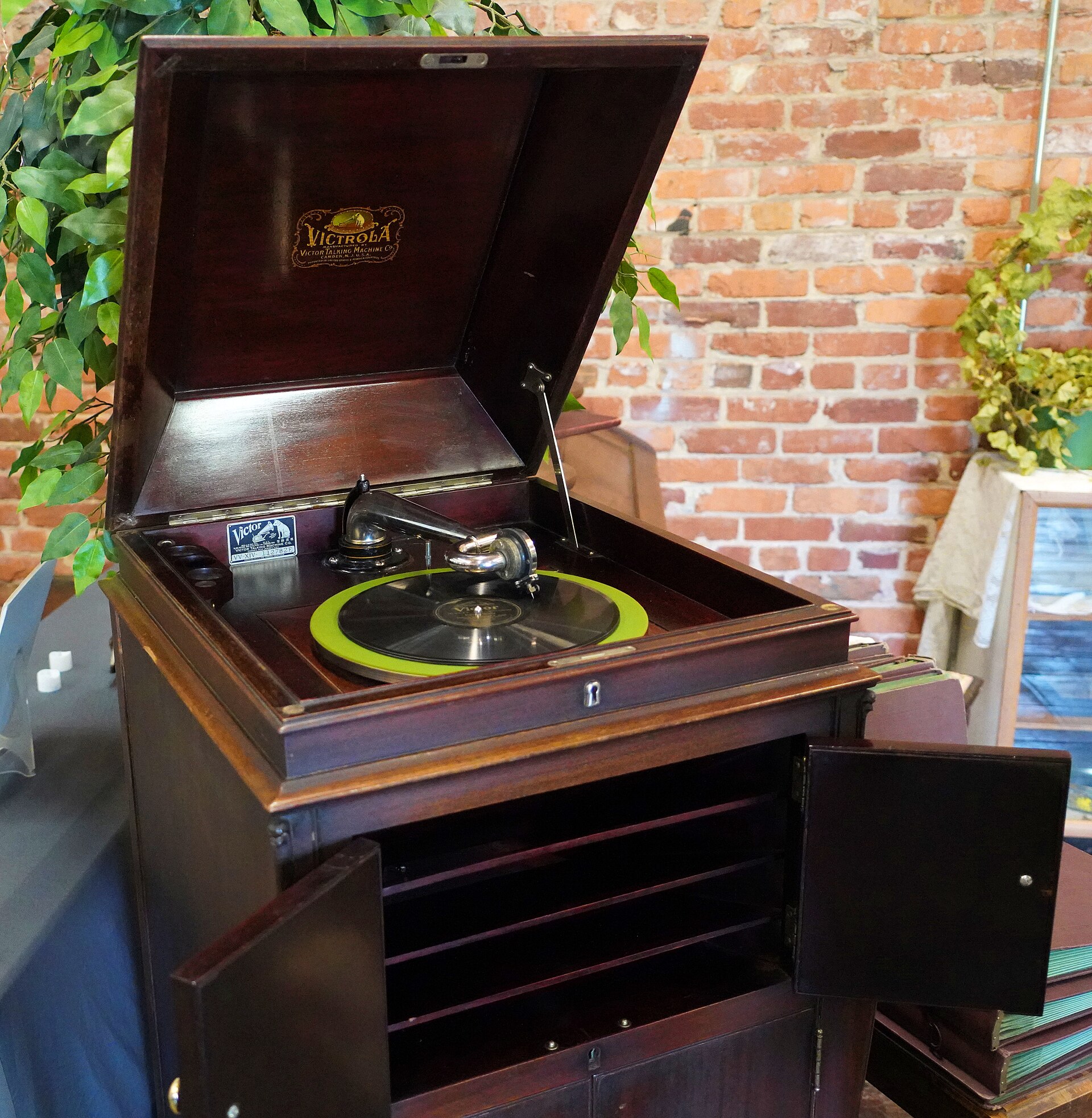
Collecting 78s usually means also preparing equipment and styli capable of playing them.
For the basic relationship between styli, cartridges, and tracking, you can first read How Vinyl Works and Four Types of Listeners.
Cleaning: Two Materials, Two Methods
Cleaning is the most error-prone part of collecting 45s and 78s, because the two materials have completely different tolerances to solvents.
PVC records (LPs and 45s) can withstand common record cleaning fluids. First dry-brush with a carbon fiber brush to remove loose dust, then wet-clean; for stubborn stains, using a record cleaning machine will be more thorough. Note that cleaning motions must follow the groove direction; lateral force will press dirt into the grooves.
Shellac records (78s) are much more delicate. Shellac is corroded by alcohol, so alcohol-containing cleaning fluids cannot be used. A safer approach is water with a very small amount of neutral mild detergent, working quickly and using little liquid, and ensuring labels and paper parts do not get wet. For the physical properties of this material, refer to the explanation on Shellac.
- After washing, they must be completely dry before playing, especially 78s whose wide grooves easily retain moisture.
- Dirt on 78s often lodges at the bottom of the wide grooves, requiring brushing with slightly stiffer bristles along the groove direction, rather than just surface wiping.
- Do not use the same cloth to wipe 78s and then LPs.
- Cleaning changes the surface condition; it cannot repair already worn grooves. If the noise comes from wear, cleaning will not substantially help.
Storage Tips
Shellac and PVC have different mechanical properties, so storage methods should also be considered separately.
- Store 78s vertically, avoid stacking. Shellac is not as elastic as PVC; long-term pressure may cause cracking, and edges should also be protected from knocks during handling.
- Use storage space suitable for 10-inch records separately. Putting 10-inch records into 12-inch slots will make them slide back and forth and rub against each other.
- Humidity control is equally important for shellac. Excessive moisture will damage labels and paper sleeves, and shellac itself absorbs moisture. The storage environment should be stable, avoiding drastic temperature and humidity changes.
- Pay attention to inner sleeve material. PVC inner sleeves in long-term close contact with the record surface may cause hazing; switching to polyethylene inner sleeves or paper inner sleeves is safer.
- Hold the edges when handling, do not pinch the record surface. Finger oils leave marks on coarse-groove records that are harder to clean than on LPs.
- Record version information. Speed, label, catalog number, stylus tip size—these details are very useful when reorganizing years later; once the quantity grows, using tools to manage versions and condition is more reliable than memory. For related methods, see Vinyl Collection Organization Guide.
Where to Start
If you are interested in singles or 78s, first choose a clear direction: a certain label, a certain era, or a certain genre. The smaller the scope, the easier it is to build judgment, and the less likely you are to buy duplicate versions.
For 78s, a sense of direction is especially important. They survive in large numbers and are diverse, while playback barriers are high; aimless collecting quickly turns into hoarding. You can first set a rule, such as only collecting releases from a certain label before a certain era, or only collecting recordings of a certain genre. Rules will let you make decisions faster at stalls and give your equipment investment a clear return.
For 45 singles, limitations can come from format: only collect picture sleeves, only collect pressings from a certain country, or only collect promotional copies. Format-based limitations are usually easier to enforce than collecting by artist, because they can be judged at a glance on site.
FAQ
Can 78s be played on an ordinary turntable?
Yes, but the stylus must be changed. Playing 78s with an LP's fine stylus will make the sound muffled, and the fine stylus will slide unstably in the wide grooves, possibly causing damage. Also confirm that the turntable supports 78 RPM speed, and note that tracking force settings are usually different from LPs.
Why do my 78s sound bright and thin?
First check the equalization curve. Records before 1954 were cut by various labels using their own curves; playing them with a phono stage that only supports RIAA will produce an overall tonal deviation. If the sound is bright or thin consistently across all frequencies, it is likely a curve issue; if it is localized crackling, then it is a condition issue.
Can shellac records be washed directly with water?
Yes, but control the method. Use water with a very small amount of neutral mild detergent, work quickly, avoid soaking, and ensure the label area does not get wet. Alcohol-containing cleaning fluids cannot be used because they corrode shellac. After washing, they must be completely dry before playing.
Are all 78s valuable?
No. The value distribution of 78s is very uneven: survival numbers, label versions, artists, and recorded content together determine price; the era itself is not a reliable indicator. When evaluating a specific record, look up its label and catalog number rather than appraising it by the category of "old record."
Should I collect 45s or 78s first?
It depends on whether you are willing to invest in equipment. 45 singles share the same styli and equipment as LPs, so the barrier is low; 78s require an additional stylus and may also need adjustable equalization, but once the equipment is in place, it opens up repertoire that LPs cannot cover. When budget is limited, starting with 45s is more practical.
The depth of a collection often comes from limitations, not quantity. Treat 45s and 78s as two independent paths, and you will be clearer about what to buy at each step, which stylus to use, and where to put them.
Image Sources
Photos in this article are taken from Wikimedia Commons and used under the licenses indicated for each image; illustrative diagrams are created by GROVV.
- 7-inch singles come in large-hole and small-hole versions, and the large-hole version requires a center adapter: Shushushu · CC BY-SA 3.0 · Source
- 78s are mostly 10-inch shellac records, with a more brittle material, and require a thicker stylus: Banfield · Public domain · Source
- Collecting 78s usually means also preparing equipment and a stylus that can play them: Jeff Miller from New Port Richey, FL, United States · Public domain · Source


